
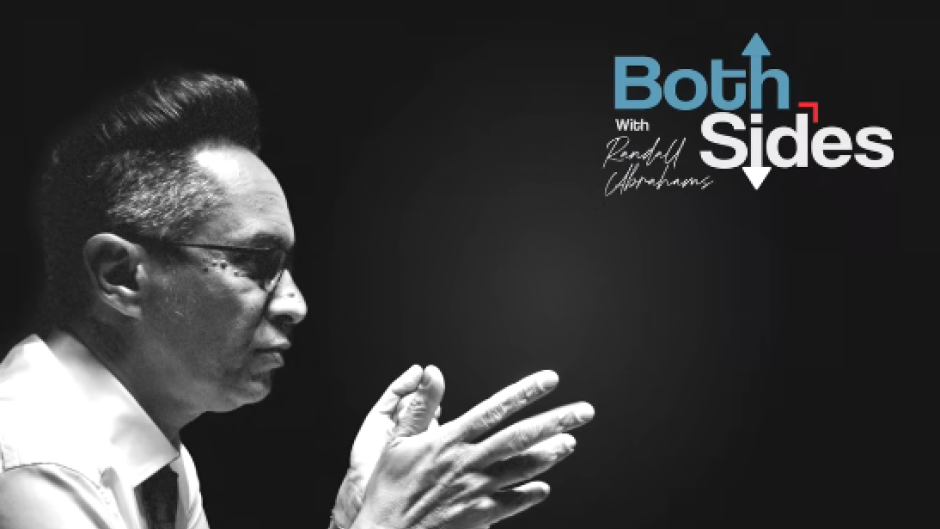
There are instruments that entertain, and then there are instruments that remember.
In this episode of Both Sides, Randall Abrahams’ conversation with Billy Monama begins in familiar territory for music lovers: guitars, technique, stylings, tunings and
the deep joy of South African sound. But very quickly, the discussion moves beyond the instrument itself. The guitar becomes a doorway into something larger: memory, forced removals, African jazz, cultural survival and the stories South Africa still has not fully archived.
Monama’s central argument is simple, but powerful. South African music cannot be separated from the society that produced it. African jazz of the 1950s was not created in a vacuum. Cape Town jazz cannot be discussed without District Six and forced removals. Mbaqanga, freedom songs and township music all carry the weight of community, politics, movement and resistance. In Monama’s view, musicians were not only performers. They were often the mouthpiece of society.
That idea gives the episode its deeper force. This is not a nostalgic conversation about old records. It is a conversation about what happens when a country fails to document its own cultural inheritance properly.
One of the strongest moments comes when Monama reflects on looking for South African guitar material and finding almost nothing. No proper tutorials. No books. No clear point of reference. That absence became the beginning of his work as an author, educator and archivist. He wrote from the memory of the people, gathering stories from musicians, families, record collectors and pioneers who had carried this knowledge long before anyone thought to preserve it formally.
The episode also makes room for joy. Monama speaks about picking up the guitar at 14, the influence of church, neighbourhood stokvels, street-level mentorship and the records he heard at home. There is humour in the conversation too, especially when Randall asks whether the guitar helped with the girls. Monama’s answer lands with the kind of honesty every guitarist can recognise.
But even the lighter moments point back to a serious truth. Music is passed through people. Sometimes through families. Sometimes through neighbours. Sometimes through a player two blocks away who opens a world of Miles Davis, George Benson, Wes Montgomery and local styles. Formal education matters, but Monama’s journey shows that cultural education also happens in streets, homes, churches and community halls.
The live guitar demonstrations are an important part of the episode. They show why technique matters, but also why technique is never only technical. Tuning, open strings, rhythm and movement help form a language. In Monama’s hands, the guitar is not simply played. It speaks. It carries traces of different regions, traditions and histories.
The conversation also turns to the Rebirth of Ubuntu concert, which Monama frames as a continuation of the same work. It is not just a performance. It is preservation, tribute and mobilisation. For him, music still has a social role. It can bring people into a room, make them listen, awaken memory and, at its best, help heal the nation.
That may be the real lesson of the episode. South African music is not a side note to history. It is one of the places where history lives.
And if nobody protects those songs, the silence that follows will be louder than we think.
Catch up on all Both Sides episodes here: https://www.enca.com/both-sides-podcast