
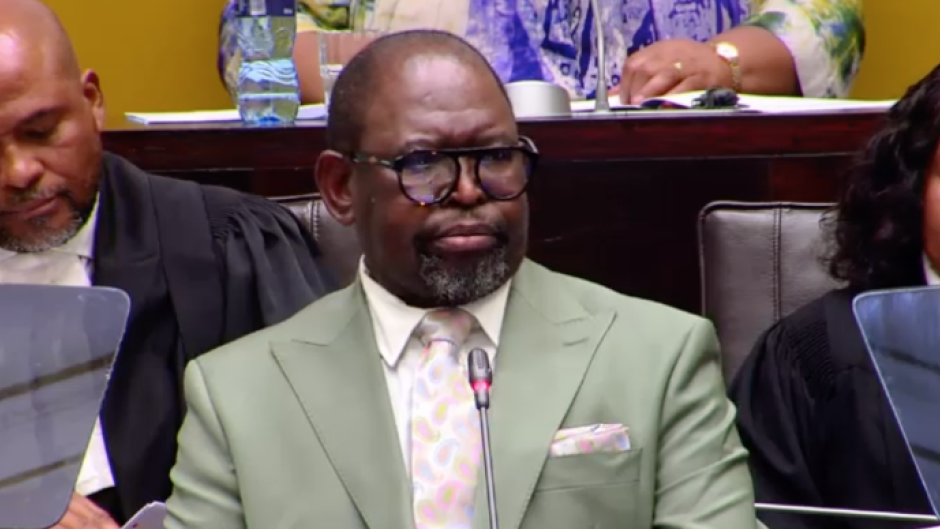
Finance Minister Enoch Godongwana
CAPE TOWN - Finance Minister Enoch Godongwana presented the Medium-Term Budget Policy Statement in parliament on Wednesday.
The mid-term budget speech provides an overview of how well government is managing the country’s finances.
In May this year, Finance Minister Enoch Godongwana projected that the country would grow by 1.4 percent this year.
That figure has been revised down to 1.2 percent and for the next two years, growth is estimated at just below two percent.
Godongwana says GDP growth will average 1.8 per cent between 2026 and 2028.
The minister also announced a new inflation target for South Africa of 3 percent with a 1 percentage point tolerance band.
WATCH | Finance Minister tables medium-term budget policy statement
This year, revenues will exceed the budget estimates by R19.3 billion. This means we collected more money than we thought.
This is due to higher VAT collections, as well as corporate and dividends taxes.
Meanwhile, debt-service costs will be lower by R4.8 billion.
Additional Expenses:
For the current year, additional expenditure of R15.8 billion is proposed.
Funding to the tune of R4.1 billion is also allocated for disaster relief to fix schools, pipelines, clinics and substations damaged between last year and this year by flooding in KwaZulu Natal, Mpumalanga, and the Eastern Cape.
To raise the funding for these BFI projects, a new infrastructure bond will be launched soon to raise a minimum of R15 billion.
Cutting back on fraud and corruption:
We are implementing medium-term savings of R6.7 billion by closing or scaling down low-priority and underperforming programmes immediately. More than half of this involves identifying people who are double-dipping and defrauding the social grants system.
Logistics:
Eleven private train operators now have slots on 41 routes across six corridors.
Port efficiency is improving, with vessel waiting times down 75 per cent, while container handling is faster.
With Durban Pier 2 welcoming private operators, we expect to unlock R200 billion in investment over the next five years.
These much-needed reforms in logistics will increase the volume of rail freight, reduce port congestion and improve the country’s economic performance.