
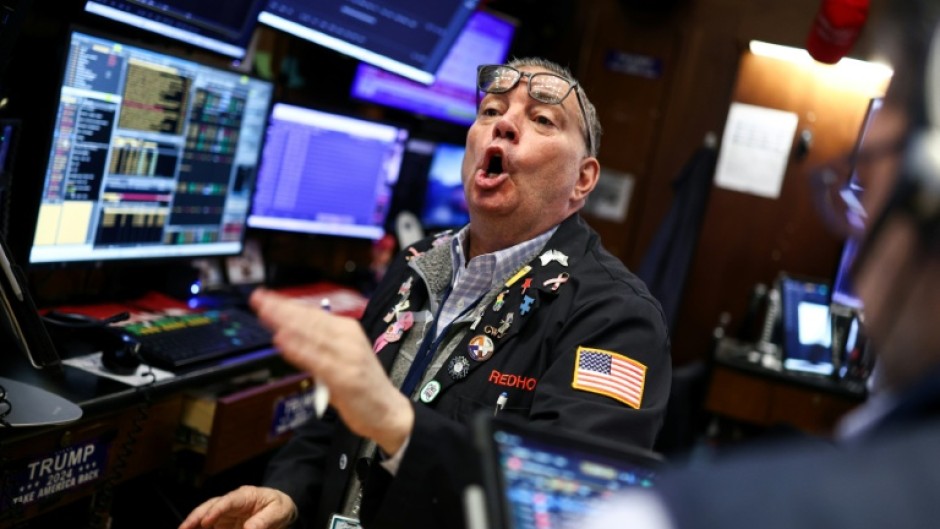
NEW YORK - Oil and gas prices soared, stock markets mostly retreated and the dollar rallied on Monday as the widening Iran war shook financial markets across the globe.
European natural gas prices surged more than 39 percent after Qatar's state-run energy firm said it had halted liquefied natural gas production following Iranian attacks on facilities at two of its main gas processing bases.
World crude futures jumped more than six percent on fears of disruption to supplies, with the vital Strait of Hormuz -- through which around 20 percent of global seaborne oil passes -- effectively shut and several ships attacked.
Wall Street's main indices fell decisively at the start of the session but recovered throughout the day as investors greeted talk that the spike in energy prices might prove short-lived.
While the Dow still finished lower, the Nasdaq ended in positive territory and the S&P 500 eked out a small gain.
"Investors have been conditioned over the last 15 years to not overreact to these geopolitical headlines," said Angelo Kourkafas of Edward Jones, adding that investors see the United States as better able to withstand the energy-price surge compared with other leading economies as a major oil and gas producer.
But the coming days "will be choppy," Kourkafas predicted.
Equities took a harder hit in Europe and Asia as investors looked beyond stocks in favour of the dollar and gold, seen as safer bets in times of economic unrest.
The greenback jumped around one percent against its major rivals. Gold prices finished 0.8 percent higher after a bigger increase earlier in the day.
"Investors are scuttling towards safe havens, seeking shelter as conflict widens in the Middle East," noted Susannah Streeter, chief investment strategist at Wealth Club.
"What happened over the weekend and what continues now has created added uncertainty," said Briefing.com analyst Patrick O'Hare.
However, there has not been a rout on equity markets "because participants are not convinced yet the military action will fuel disarray for the global economy."