
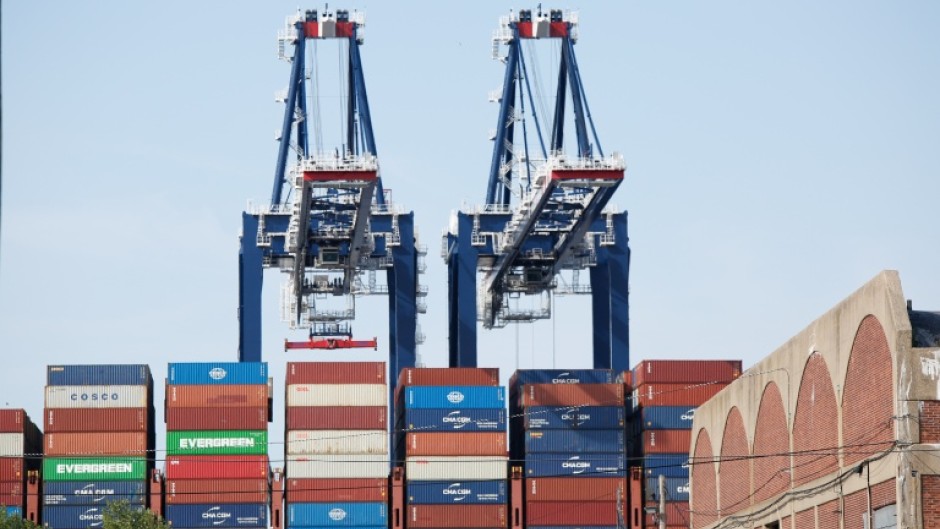
WASHINGTON - The United States on Wednesday unveiled proposed tariffs on the European Union, China and a dozen other countries over their alleged unfair economic practices, threatening renewed tensions with both friends and foes via President Donald Trump's trade war.
The proposal follows a months-long investigation into excess manufacturing capacity and production, launched days after the US Supreme Court struck down Trump's previous slew of tariffs.
The duties range up to 20 percent and face a period of public comment before taking effect, at the earliest in January.
A senior US official, speaking on condition of anonymity, noted that the proposals seek to take existing trade deals into account.
The new levies target some of the largest US trading partners, including China, the European Union, India, Bangladesh, Cambodia, Indonesia, Japan, South Korea, Malaysia, Singapore, Switzerland, Taiwan, Thailand and Vietnam.
China is among the countries facing the highest 20-percent tariff, but US Trade Representative Jamieson Greer said the new levies were within the bounds of existing trade negotiations with Beijing.
"China understands that we're going to have some level of tariffs. This falls within that understanding," he told US broadcaster CNBC, adding that the US was offering China exemptions on around $30 billion of goods.
The EU said it rejected the premise of new tariffs and expected Washington to stick by a deal struck with Brussels last year.
"The EU and the US share a real concern about global overcapacity, much of it state-driven and concentrated in third countries. We regret the lack of joint action," European Commission spokesman Olof Gill said.
China's foreign ministry, responding to a question about the new levies before they were officially announced, warned Washington not to engage in "tariff wars and trade wars."
- Not stacked on deals -
Vietnam also faces a proposed 20-percent tariff; Cambodia and Indonesia 18 percent; and India 17 percent, according to the USTR's office.
Partners like the EU, Korea and Taiwan, which have signed earlier trade deals, will see tariffs broadly capped at 15 percent.
In a separate announcement, USTR also proposed additional tariffs on goods from Brazil, including aircraft, over alleged inaction on addressing US trade concerns.
The Brazilian president's office called the tariffs "unacceptable" and said Brazil would "not yield to this type of threat."
Trump's tariffs have targeted Washington's friends and foes alike, and are part of a push in his second term to remake global trade by forcing countries to buy US products or produce their goods in his country.
With Trump preparing to host G20 leaders in Miami next month, the senior US official rejected the notion that the new tariffs could cause tensions at the summit.
"We actually expect that we may be signing more agreements at the G20 in the wake of these announcements," the official said.
- Inflation pressures -
Overcapacity concerns affect a range of sectors, from batteries to cement, chemicals to processed food, the senior US official said.
The duties could add further pressure on US businesses already squeezed by earlier tariffs, with firms now likelier to pass on expenses to consumers already frustrated with the high cost of living.
Affordability was a key issue in recent US midterm elections, which saw Trump's Republican Party swept out of power in both chambers of Congress by Democrats.
The US Federal Reserve's preferred inflation gauge also came in at a three-year high in October.
Fed policymakers, responsible for keeping inflation to a long-term two-percent target, say that most price effects of Trump's previous tariff rollout have passed through the economy -- but any new levies could push prices up further.
By Asad Hashim And Beiyi Seow
AFP