
A Legacy Forged in Steel
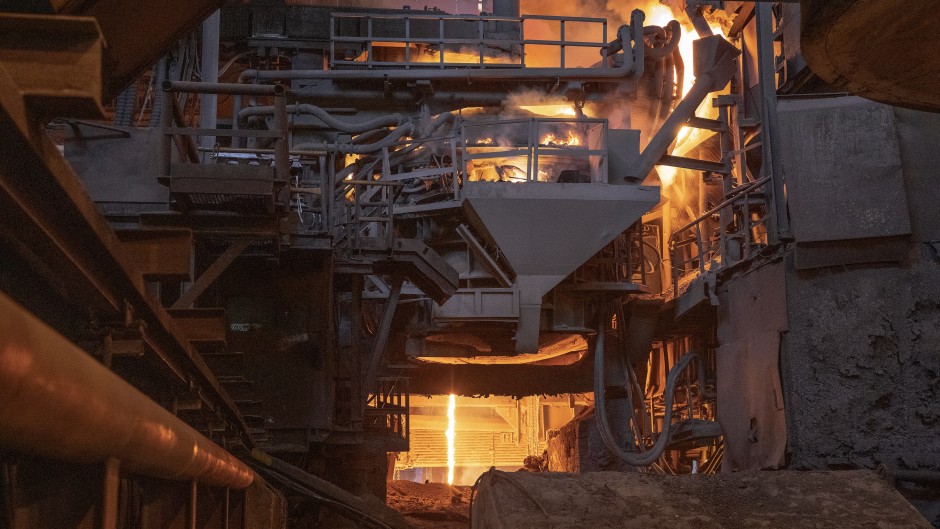
ArcelorMittal South Africa (AMSA), the country’s largest steel producer, is shutting down its long steel division, a move that threatens thousands of jobs and the future of local steel manufacturing. The company cites unresolved structural issues, including rising imports, inadequate tariff protection, soaring electricity costs, and a failing rail system. Talks with government have stalled, leaving little hope of halting the retrenchments.
The company’s roots stretch back to 1928, when it was founded as Iscor, a state-owned enterprise designed to drive industrialisation and job creation. It poured its first steel in 1934, expanding rapidly during WWII to meet military demands.
In the decades that followed:
- 1947: A major integrated steel plant was built in Vanderbijlpark.
- 1971: Construction of a second major plant in Newcastle began.
- 1989: Iscor was privatised and listed on the Johannesburg Stock Exchange.
- 1990s–2000s: The company expanded through acquisitions (e.g., USCO, Saldanha Steel) and unbundled its mining and steel operations.
Through a series of global mergers and rebrandings:
- 2005: Became Mittal Steel South Africa.
- 2006: Renamed ArcelorMittal South Africa after the global Arcelor-Mittal merger.
From Deferral to Retrenchment
Fast-forward to November 2023; AMSA issued a SENS announcement declaring that its Longs Steel Business would be placed under care and maintenance. This followed years of cost-cutting, productivity drives, and efforts to find sustainable solutions.
CEO Kobus Verster cited persistent structural constraints, including low domestic demand and high energy and logistics costs, as the main drivers behind the decision.
In an interview with eNCA at the time, Verster noted he was not angry, but disappointed. “We’ve seen this coming for quite some time, and the Newcastle and the Long Products team have been working hard to try to prevent this. But it was just impossible.”
Since then, the closure and retrenchment process has been a stop-start affair, marked by deferrals, conditional agreements, and political pressure.
In April 2025, a nearly R1.7 billion facility from the Industrial Development Corporation (IDC) and Temporary Employee Relief Scheme (TERS) funding was made available, and the wind-down was once again deferred.
“In my mind, the six-month period is to create a permanent solution,” Verster noted at the time.
However, in July 2025, the company warned yet again:
“The Longs Business will only be able to continue with financial support, as the Company does not have the ability to bear any further financial risk associated with its continued operations after the Deferral Period. Unless a solution is implemented timeously… ArcelorMittal South Africa may have no option but to take certain operational steps to prepare for the wind-down process well in advance of 30 September 2025.”
By the end of August 2025, thousands of employees received a letter from the CEO, informing them that the retrenchment process would resume from 1 September.
In its latest statement, AMSA says consultations between them, the IDC, government and other stakeholders remain ongoing to fend off what seems to be the inevitable.
“Unfortunately, despite the hard work put a solution has not been implemented. Further, funding to operate the Longs Business beyond 30 September 2025 has not been obtained.”
Why It Matters
ArcelorMittal SA isn't just another company; it has been the backbone of South African industry for nearly a century. The loss of its long steel division risks:
- Mass job losses, far beyond the 3,500 initially projected.
- Collapse of local manufacturing, construction, and mining supply chains.
- Increased reliance on steel imports, weakening industrial sovereignty.
Saving AMSA is not just about preserving jobs; it's about securing South Africa’s industrial future.