
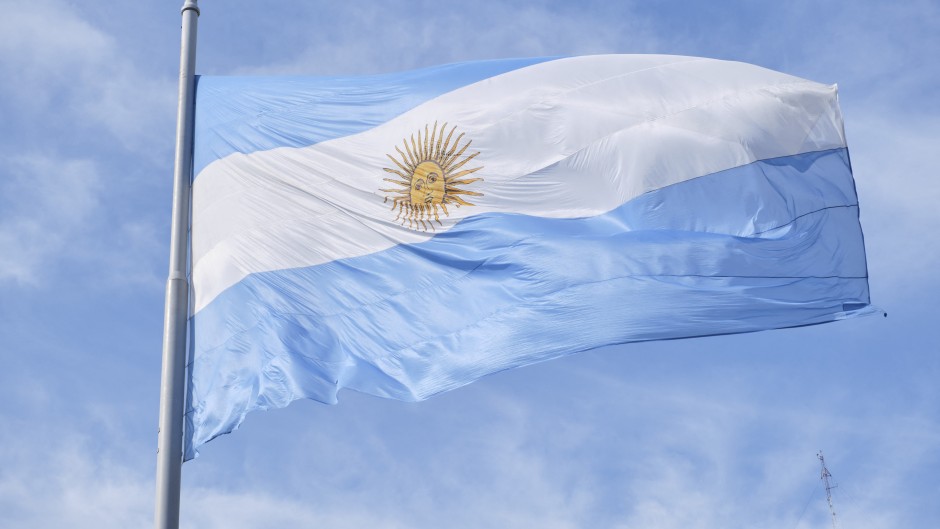
JOHANNESBURG - Before 1500, Argentina was home to indigenous peoples, including the Diaguita, Guarani and Mapuche.
Europeans first arrived in 1502 and a Spanish settlement was founded in 1536 near Buenos Aires, however, it was later abandoned.
In 1580, it became a permanent settlement, marking the beginning of the colonisation of Argentina.
During the late 1800s, a large number of Europeans moved to Argentina.
It resulted in economic growth driven by agriculture, especially beef and wheat as well as the construction of railroads.
By the early 1980s there was a push for democracy.
Raúl Alfonsín was the country’s first democratically elected President and was sworn in on 10 December 1983.
However, between 1989 and 2001 the economy took a knock and the country continues to grapple with economic instability, inflation and debt.
This is despite President Javier Milei’s promises of radical economic reforms when he was elected in 2023.
ECONOMY:
The Argentine economy grew by 6.3% in the second quarter of 2025 compared to the same quarter in 2024.
According to INDEC, the country’s national statistical agency, a strong performance in finance, tourism and construction boosted GDP.
The central bank meanwhile forecasts GDP to grow 4.4% this year.
According to Argentina’s latest trade trends, the country’s top exports were soybean meal ($1.22 billion) soybean oil ($1.11 billion), corn ($868 million), and Gold ($677 million).
G20 HISTORY:
Argentina took over the G20 Presidency in December 2017, at a time its economy was recovering from major macroeconomic imbalances.
The 13th G20 summit was held in Buenos Aires from 30 November to 1 December 2018 under the theme ‘Building consensus for fair and sustainable development’.
The country focused on three priorities: a people-centred approach, reducing poverty and inequality as well as promoting greater and shared prosperity.
The priorities were set out as follows: future of work; the fourth industrial revolution; health; youth; infrastructure for development; and sustainable food security.
FUN FACTS:
- Football and rugby are popular, but the national sport is pato which is similar to polo and played on horseback. It has been Argentina’s national sport since 1953.
- On average, Argentinians consume 46.93kg of beef per person per year and has 50 million cattle.
- In 2001, Argentina had five different presidents in ten days.
- Tango originated in Buenos Aires in the late 19th century.
- A report revealed that Argentina had 286 psychologists per 100,000 people, the world’s highest.
By Lerato Manzi