
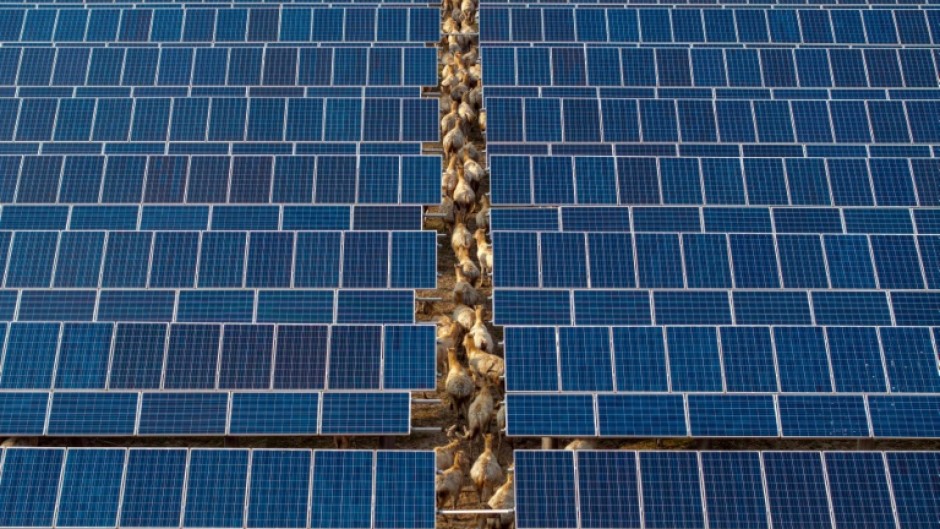
BEIJING - China's emissions fell in the first quarter of 2025 despite rapidly growing power demand thanks to soaring renewable and nuclear energy, a key milestone for the world's top emitter, analysis showed.
China emits more planet-warming greenhouse gases such as carbon dioxide than any other country. It plans to peak carbon emissions by 2030 and achieve carbon neutrality by 2060.
It has invested heavily in its renewable energy sector, building almost twice as much wind and solar capacity as every other country combined, according to research published last year.
New wind, solar and nuclear capacity meant China's CO2 emissions fell by 1.6 percent year-on-year in the first quarter and one percent in the 12 months to March, said analyst Lauri Myllyvirta at the Centre for Research on Energy and Clean Air (CREA).
The analysis is based on official figures and commercial data.
China's emissions have dipped before, but those reductions were driven by falling demand, such as during strict Covid lockdowns in 2022.
This time the drop came despite China's total power demand surging 2.5 percent in the first quarter, said the report published in Carbon Brief.
"Growth in clean power generation has now overtaken the current and long-term average growth in electricity demand, pushing down fossil fuel use," Myllyvirta said.
"The current drop is the first time that the main driver is growth in clean power generation."
Power sector emissions fell 5.8 percent in the first quarter, offsetting rises in emissions from coal use in the metals and chemicals industries.
But the report cautioned that emissions could rise again if Beijing seeks to stimulate carbon-intensive sectors in response to its trade war with Washington.
China also remains "significantly off track" for a key 2030 target to reduce its carbon intensity -- carbon emissions relative to GDP -- under the Paris climate agreement.
China pledged to achieve a 65 percent reduction in carbon intensity by 2030 from 2005 levels.