
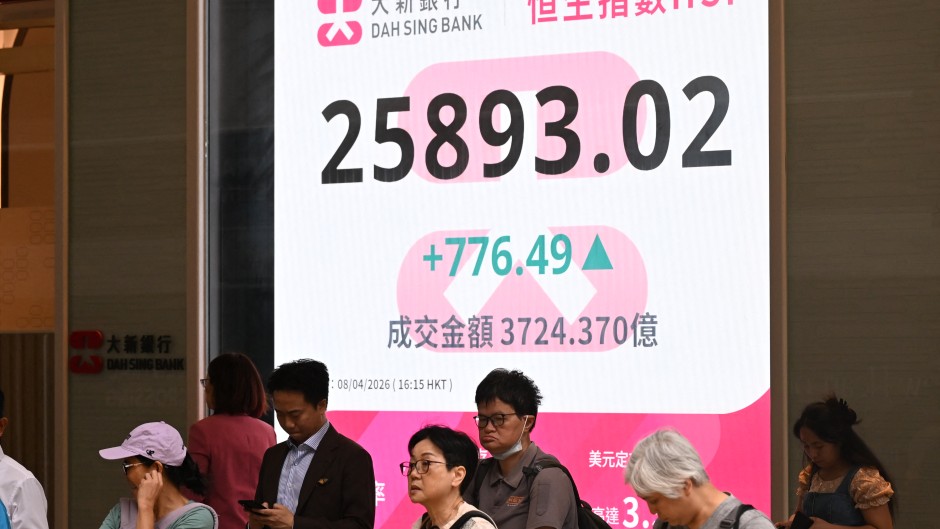
An electronic sign board shows the Hang Seng Index closing price in Hong Kong. AFP/Peter Parks
HONG KONG - Oil prices climbed and stocks fell on Thursday on fears over the nascent US-Iran ceasefire after Tehran threatened to resume hostilities after Israel launched a major bombardment of Lebanon.
Equity markets across the globe soared and crude plunged on Wednesday after US President Donald Trump announced the two-week halt in the war, and the Islamic republic said it would reopen the Strait of Hormuz as peace talks took place.
But with the deal less than a day old, cracks were already appearing as Tel Aviv said it did not include Israel's fight against Iran-backed Hezbollah in Lebanon as it continued attacks on its northern neighbour.
Fears that the ceasefire could fall apart while crude remains stuck in Hormuz saw West Texas Intermediate oil jump around three percent Thursday, having plunged more than 16 percent the day before. Brent was up more than two percent following a 13 percent drop.
Equities also gave up some of their gains.
Tokyo, Hong Kong, Shanghai, Sydney, Singapore, Seoul and Taipei were all down.
Attention is also turning to crunch talks in Pakistan that are expected on Friday or Saturday, with Vance leading the US delegation.
"Many questions remain with the 10-point plan that Trump has received from Iran (which includes Iranian control of the Strait of Hormuz, US acceptance of Iran's uranium enrichment programme, the end of all sanctions and withdrawal of the US military from the Gulf region) is at odds with Trump's 15-point peace plan," wrote National Australia Bank's Skye Masters.
Still, observers warned that an end to the conflict would not see a quick return to normal, with crude prices still elevated and key regional infrastructure targeted that could take billions of dollars and at least months to repair.
Shipping journal Lloyd's List estimated around 800 ships have been stuck in the Gulf since the end of February, when hostilities broke out.
Still, FOREX.com analyst Fawad Razaqzada said: "Investors are confident that oil prices could ease further and the Strait of Hormuz will reopen again and hopefully stay open beyond the two-week ceasefire period."