
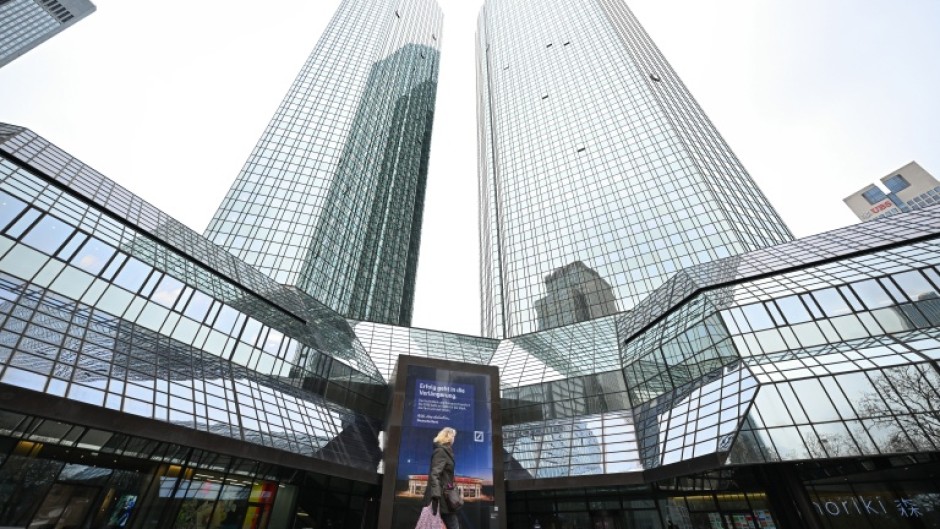
MUNICH - Shares in Deutsche Bank plunged on Tuesday after international media outlets published reports based on millions of leaked emails and other documents that shine a light on questionable past business practices at the German banking giant.
The leaks deal with the bank's business over the past 20 years, including ties to Russian oligarchs, the convicted sex offender Jeffrey Epstein, and Donald Trump before he became US president.
The data, shared by unidentified whistleblowers, raised questions about internal controls at Germany's largest bank and reignited questions regarding chief executive Christian Sewing's efforts to turn around the institution.
The investigation, dubbed "Inside Deutsche Bank", was conducted by over 200 journalists from a media consortium that included The Financial Times, Der Spiegel, Le Monde, the New York Times, the German public broadcaster ZDF and the Austrian daily Der Standard.
Deutsche Bank shares fell by nearly six percent shortly after the opening of the Frankfurt Stock Exchange.
According to the reports, the bank at times prioritised commercial interests over compliance with international sanctions, anti-money laundering regulations and even its own internal procedures.
The data originated from two whistleblowers and was channelled through South African and Indian journalists to more than 50 media outlets worldwide.
The documents reportedly detail, among other things, how Deutsche Bank courted oligarchs and sought to expand its Russian operations shortly before Russia's 2022 invasion of Ukraine, despite warnings about regulatory and money-laundering risks.
Documents cited by the media outlets indicate that Sewing was among the participants in the working group that developed the Russia strategy.
The reports also note that the bank's announced withdrawal from the Russian market after the Ukraine invasion remains incomplete.
As of last year, Deutsche Bank still employed 162 people in the country and its local subsidiary generated a pre-tax profit of 61 million euros ($67 million).
The data also contain new details regarding the bank's long-standing business relationship with Epstein as well as its dealings with Trump.
Furthermore, the documents indicate that the bank set up controversial tax-optimisation schemes for wealthy clients, and suggest that criminal networks were able to funnel money through the bank.
The documents also offer insights into arms deals involving problematic states, the bank's support for clients in environmentally damaging industries, and the holding of donation accounts for Germany's far-right AfD political party despite internal opposition.
Deutsche Bank does not dispute that the records are genuine, though it refers to them as "purported internal documents" and noted that some of the incidents cited date back more than two decades.
The bank said that it reviewed these matters with regulatory authorities at the time and that it had invested seven billion euros between 2019 and 2025 to strengthen its control systems.
It is now "a different bank", it said, pointing to record profits in 2025 and progress made in terms of compliance.
- AFP