
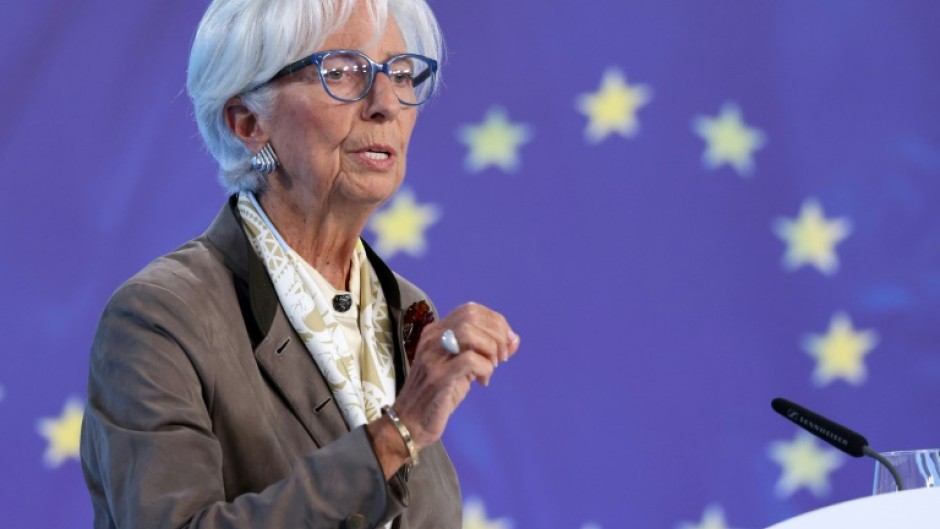
BRUSSELS - European Central Bank chief Christine Lagarde said she was "confident" officials would seek to reduce uncertainty as France's crisis rattles investor confidence, and suggested the bank was ready to intervene if needed.
As expected, the central bank for the 20 countries that use the euro left its key deposit rate at two percent for a second straight meeting, with inflation and EU-US trade tensions having eased.
But the focus of the meeting was on political turmoil in France, the eurozone's second-biggest economy, where the prime minister quit this week after being defeated in a confidence vote.
The crisis has sent French borrowing costs, a measure of investor confidence, sharply higher.
Asked about the turbulence, Lagarde said she was "confident" that policymakers would seek to "reduce uncertainty as much as possible".
But she added the ECB always closely monitors that "market developments and euro area sovereign bonds are orderly and are functioning smoothly".
"We believe that we have all the necessary tools if needed", to ensure the ECB can carry out its work effectively, she said.
There has been speculation the ECB might consider using a mechanism that involves buying bonds of a eurozone country struggling to finance itself due to market pressure.
While the central bank stressed the tool was available if needed, Lagarde emphasised that the potential use of the scheme, which was established in 2022, had not even been discussed at this week's meeting.
Analysts believe it would only be used if the French crisis spread to other countries, pushing up their borrowing costs -- as happened during the eurozone debt crisis in the 2010s.Lagarde reiterated Thursday the central bank remained in a "good place", and inflation -- which is hovering around the ECB's two-percent target -- is where policymakers want it.
She also said that uncertainty related to trade had "clearly diminished" since the central bank's last meeting in July.
Shortly after that gathering, US President Donald Trump struck a deal with the EU that sets levies on most goods from the bloc at 15 percent.
Lagarde also sounded more upbeat about the eurozone economy as the ECB upgraded its growth forecast for this year to 1.2 percent, with positive signs coming from the manufacturing and services sectors.