
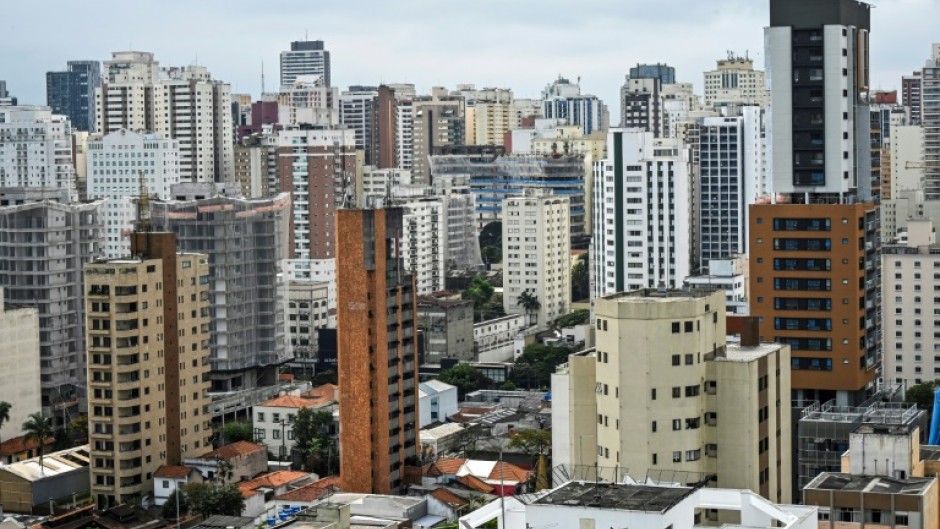
SAO PAULO - Sao Paulo, the biggest city in the southern hemisphere, is already famous for its towering skyline, a true urban jungle of concrete and glass.
But Brazil's economic capital has grown even taller since a controversial urban planning law relaxed limits on skyscrapers in 2014, unleashing a wave of high-rise projects -- but failing, critics say, in its aim of creating lower-income housing with easy access to public transportation.
A association called Pro-Pinheiros fights to protect local neighborhoods and the environment.
The skyscraper bonanza has given rise to vertigo-inducing figures: the number of new apartments on the market per year in Sao Paulo has gone from 23,000 in 2015 to 82,000 in 2021, according to real-estate association Secovi.
But the 2014 reform's goal of helping low- and middle-income families afford housing near public transportation arteries has fallen flat, says noted architect and urban planner Raquel Rolnik.
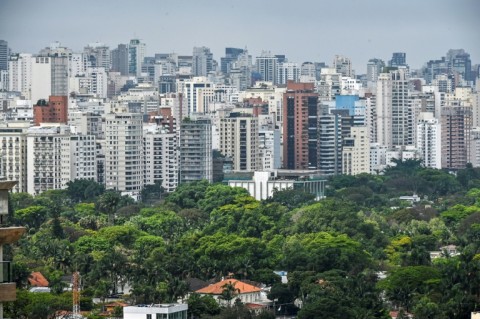
"We're going through the biggest real-estate boom in the city's history, an accelerated vertical transformation that has no relation with people's real needs," she said.
Even as the high-rises go up, the city is in a social crisis, with tens of thousands of homeless people, she added.
City hall has admitted the 2014 urban planning framework fell short of its goals, mainly benefiting swank development projects that are unaffordable for many residents.
In an attempted fix, city hall voted in June to revise the plan, allowing even more construction.
"The more supply there is, the more prices will fall. Our idea is to extend the population density zone on either side of the main transportation axes, so low- and middle-income people can live there, too," said the proposal's sponsor, city councilor Rodrigo Goulart.
Under the plan, developers who dedicate part of new projects to affordable housing win the right to build bigger buildings -- though they will not be required to.