
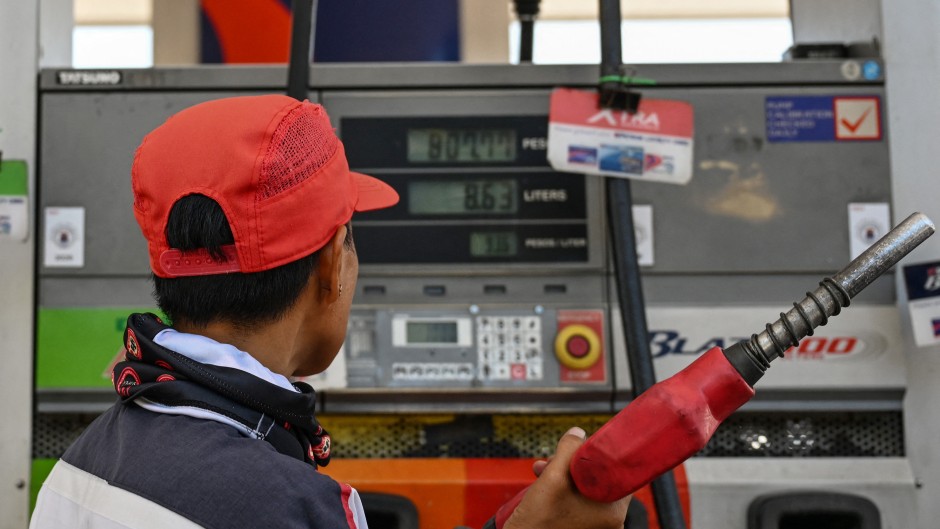
A man refuels the tank of a motorcycle at a petrol station in Manila. AFP/Jam Sta Rosa
MANILA - Philippine inflation jumped dramatically in March, hitting a nearly two-year high of 4.1 percent on the back of historically high fuel prices driven by the Middle East war.
The spike -- the highest since July 2024 and well up from 2.4 percent in February -- comes as the import-dependent archipelago struggles with a declared "national energy emergency".
The past month has seen the Philippines open supply chains with non-traditional partners like Russia to secure desperately needed oil, while instituting measures ranging from cash handouts for transport workers to a four-day work week for civil servants.
The economic planning department said Tuesday that inflation in the transport sector was largely responsible for the March surge.
"The main reason for the rise in inflation this March 2026 compared to February is the increase in transport prices, with a 9.9 percent inflation rate," national statistician Dennis Mapa told a news briefing.
The cost of diesel, used in almost all public transport, had jumped by nearly 60 percent, he added.
"Non-food inflation rose to 4.9 percent in March 2026, with private transport inflation accelerating to 31.3 percent amid a surge in fuel prices," the economic planning department said in a statement.
Non-food inflation came in at 2.8 percent in February, while private transport prices fell 3.1 percent that month.
"Also contributing to the uptrend of the overall inflation is the food and non-alcoholic beverages index with a faster annual increase of 3.0 percent in March 2026 from 1.8 percent in the previous month," it added.
Fuel prices have hit historic highs in the Philippines since treaty ally the United States and Israel launched strikes on Iran on February 28, with Tehran blocking the vital Strait of Hormuz to traffic since.
Manila last week said a "productive phone conversation" between Foreign Secretary Theresa Lazaro and her Iranian counterpart had seen Tehran pledge to allow safe passage through the strait for shipments of oil bound for the Philippines.