
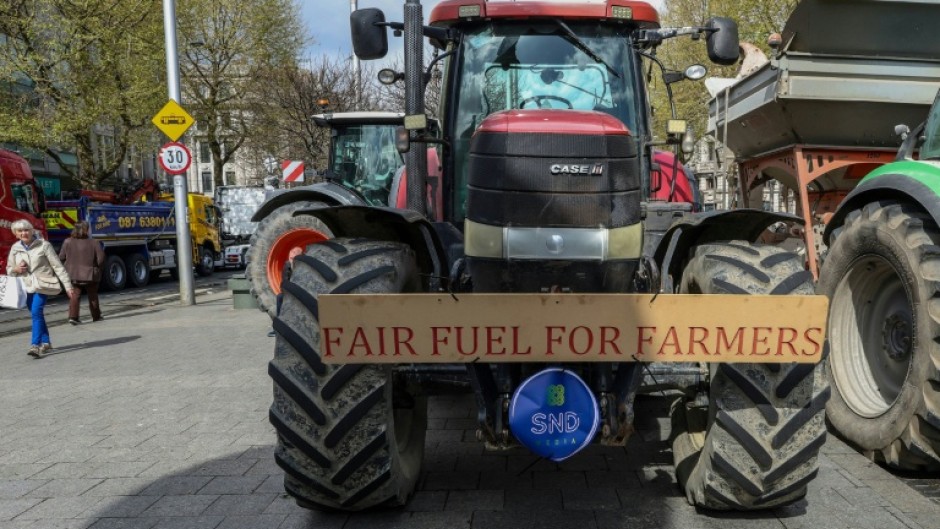
DUBLIN - The Irish government was set to hold talks Friday with agricultural and haulage representatives, as days of protests over spiralling fuel prices sparked warnings over supplies, including for emergency services.
The demonstrations began Tuesday over the soaring cost of petrol and diesel amid the Middle East war, with protesters partly blocking Ireland's only oil refinery and restricting access to at least two other fuel depots.
Demonstrators, many organising online outside of formal representative bodies, have also used convoys on motorways to snarl traffic and tractors to gridlock central Dublin on occasions.
Industry group Fuels for Ireland said 100 petrol retailers have run dry, mainly in the west of Ireland, after customers started panic buying.
It has warned of "real significant life-death problems" with supplies for emergency service vehicles, while Ireland's emergency planning group echoed the comments with "serious concern" about the situation.
Irish police warned Thursday the protests had become "blockades" which were putting critical supplies of food, fuel, clean water and animal feed at risk.
"This is not tolerable and is against the law," the country's national force, known as the Garda, said in a statement.
It added officers were "now moving to an enforcement phase" and those involved would "face the full rigours of the law".
Ireland's armed forces have been put "on standby" to assist with clearing the blockades, defence minister Helen McEntee has said.
Ministers were set to meet later Friday with 10 representative organisations for farmers, agricultural contractors and haulage operators, but it was unclear if protesters would be present.
Representative bodies recognised by the government, including the Irish Road Haulage Association and the Irish Farmers' Association, are not officially involved in the protest.
Those bodies and protesters have made varying demands around lowering the cost of fuel, in particular urging cuts to fuel taxes.
Demonstrators also want fuel prices to be capped and oil exploration off the west coast of Ireland to begin.
Government leaders have condemned the protests as "wrong" and "not in our national interest", and said the fuel blockades were holding the country to "ransom".
In March, Dublin announced a €250 million package to reduce fuel costs, notably including a diesel rebate for road hauliers.