
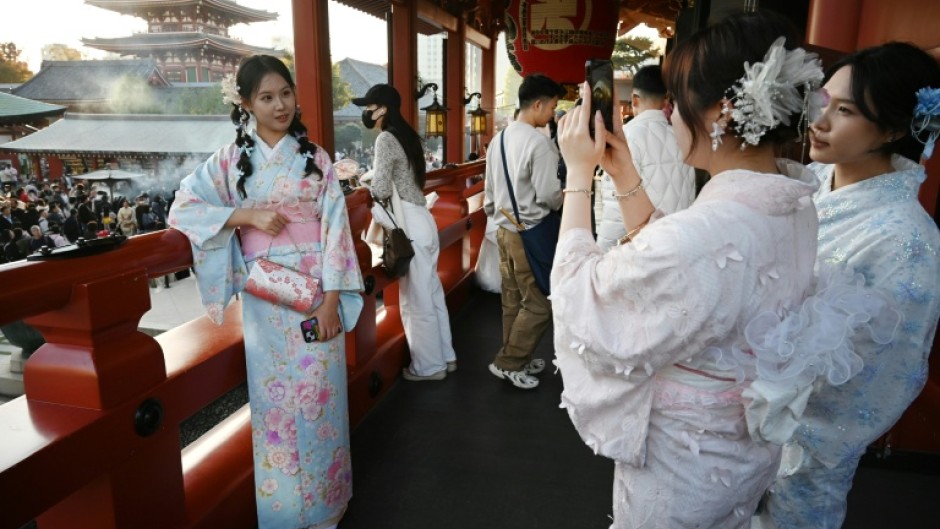
TOKYO - A souring of Beijing-Tokyo relations this month, following remarks by Japanese Prime Minister Sanae Takaichi about Taiwan, has fuelled concerns about the impact on the ritzy boutiques, noodle joints and hotels where holidaymakers spend their cash.
But businesses in Tokyo largely shrugged off any anxiety.
Many tourism and retail businesses in Japan rely heavily on Chinese visitors, who spend more on average than other foreign tourists on everything from sushi to skincare.
Some hotels, designer clothes shops and even pharmacies have Mandarin-speaking assistants, while department stores often have signs in Chinese.
China is the biggest source of tourists to the archipelago, with almost 7.5 million visitors in the first nine months of 2025 -- a quarter of all foreign tourists, according to official Japanese figures.
Attracted by a weak yen, they splashed out the equivalent of $3.7 billion in the third quarter.
Last year, each Chinese tourist spent on average 22 percent more than other visitors, according to the Japan National Tourism Organization.
However, a record 36.8 million arrivals from across the globe last year has also led to fears of overtourism affecting the daily lives of many in Japan.
According to the national tourism board, only around 12 percent of Chinese visitors last year came to the archipelago as part of organised tours, down from almost 43 percent in 2015.
Transport Minister Yasushi Kaneko said the issue was not "something to get all worked up about", noting an increase in arrivals from other countries.
Nevertheless, hotels in Japan that heavily depend on Chinese customers are feeling the effects.
Beijing has made clear it was furious with Takaichi, summoning Tokyo's ambassador and, according to Chinese state media, postponing the release of at least two Japanese movies.