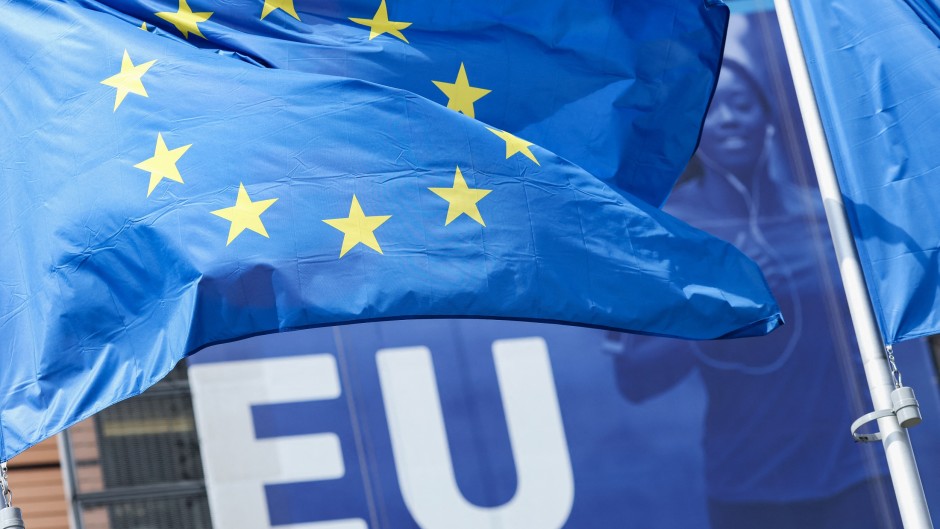
File: The flag of the European Union flying outside the European Commission headquarters in Brussels. AFP/Kenzo Tribouillard
The European Union (EU) has been a central player in the global economy and international governance.
The G20 is one of the key arenas where this influence is most visible.
The EU has been a member of the G20 since it was founded in 1999, making it unique as the only regional organisation with permanent membership.
Economics:
The European Union is one of the largest economies in the world.
According to the IMF’s World Economic Outlook, the EU’s nominal GDP stood at around $20 trillion in 2024.
With a population of around 450 million, the EU represents a massive consumer market and a major global economic force.
Unemployment across the bloc fell to 5.9% in 2024, the lowest level ever recorded.
In terms of structure, services account for nearly three-quarters of EU economic output, while industry (including construction) contributes about 22% and agriculture just over 1%.
Trade remains one of the EU’s defining features.
Extra-EU exports last year were valued at around €2.58 trillion, with machinery and vehicles leading the way at approximately €1 trillion.
The United States is the EU’s largest export market.
The EU in the G20:
The EU’s participation in the G20 reflects its role as a global economic actor and a political union committed to multilateralism.
It actively promotes a rules-based international trading system, sustainable development, climate ambition, and the digital transition.
At leaders’ summits, the EU is represented by the President of the European Commission and the President of the European Council.
The key figures are:
• Ursula von der Leyen, European Commission President
• António Costa, European Council President (since 1 December 2024)
• Christine Lagarde, European Central Bank President
Fun Facts about the EU in the G20:
• The EU has 27 member states, three of which are also G20 members in their own right (France, Germany, Italy).
• 20 of the 27 EU countries use the euro, making it the world’s second most important currency after the US dollar.
• The EU’s single market, with its free movement of goods, services, people, and capital, is one of the largest integrated economies in the world.
• The EU is the largest exporter of manufactured goods and services globally, with machinery, vehicles, and pharmaceuticals among its top trade categories.
• EU trade with the rest of the world represents around 15% of global trade, underlining its role as a central node in the global economy.
Smangaliso Mkhuma