
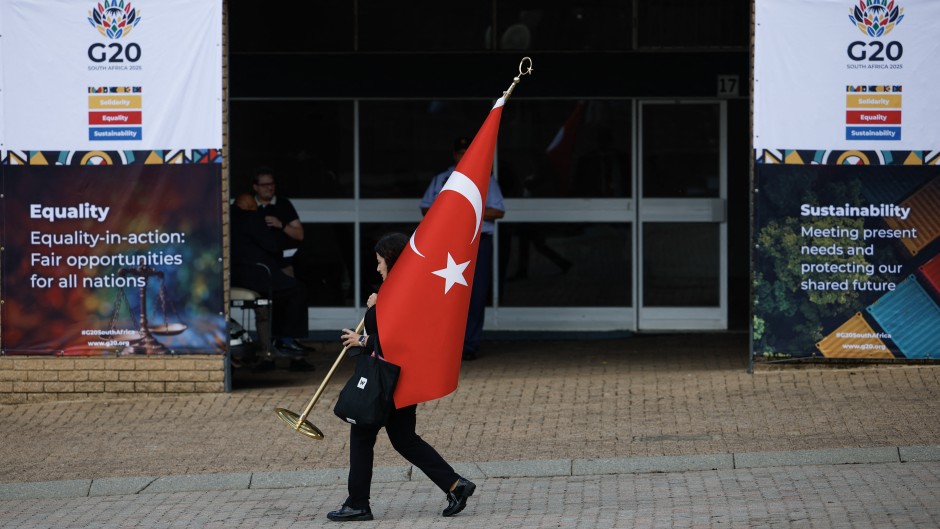
Following a successful Turkish War of National Liberation, the Republic of Turkey emerged in 1923.
The country’s first and founding President Mustafa Kemal Ataturk instituted reforms that would shape every aspect of Turkish society.
This included the converting the its alphabets from Arabic to Latin scripts, incorporating German, Swiss and Italian law codes into Turkish law and encouraging European dress.
Ataturk steered its government to mirror the Western parliamentary democracy.
The adaption of Western ways contributed to the becoming one of the initial countries to sign and ratify the UN Charter. It also became a member of NATO in 1952.
Turkey is a key regional and global player.
ECONOMY
Turkey’s economy recorded a growth of 4.8% in the second quarter of 2025, marking the fastest growth since the first quarter of 2024.
Economists attributed the quarter’s growth to increased working days in the country.
The World Bank rates Turkey as the 17th largest economy in world boasting a GDP of 1.32 trillion US dollars as of 2024.
G20 PRESIDENCY
Turkey took over the G20 Presidency term from Australia on December 1, 2014 and set its term theme as “Collective Action for Inclusive and Robust Growth”.
This theme expanded a discussion at the summit under three priority pillars titled: inclusiveness, implementation and investment.
During Turkey’s presidency, it emerged at the first energy minister’s meeting, that there were about 1.1 billion people worldwide who were deprived of energy. About 650 million of them lived in sub-Saharan Africa.
At the G20 Summit in Antalya (Turkey), in 2015, the G20 looked for the first time at migration and refugee movement.
They also agreed on further financial sector reforms and resolved to support the global climate agreement.
The Leaders also issued a G20 Statement on the Fight against Terrorism.
FUN FACTS ABOUT TURKEY:
- The word "turquoise" comes from "Turquois", meaning "Turkish" in French. This is because the mineral was first brought to Europe through Turkish trade routes.
- Turkey has two continents. Istanbul straddles both Europe and Asia, with the Bosphorus Strait dividing the city.
- Santa Claus is technically Turkish. Saint Nicholas - the real-life figure behind the legend - was born in Patara, a Roman town that sits on the Turkish coast.
- Derinkuyu in Cappadocia is the world's largest underground city, with eight floors descending 85 metres below ground, in which it once housed 20,000 people.
- Turkish coffee is so important culturally that UNESCO listed it as an Intangible Cultural Heritage.