
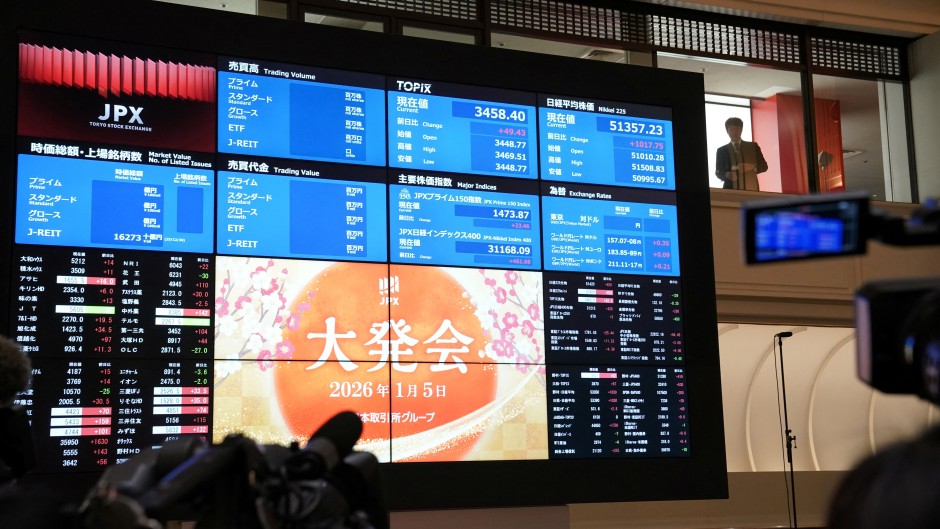
HONG KONG - Most Asian markets rose on Tuesday, tracking the year's first record on Wall Street as investors racked up AI-linked tech bets, while oil prices steadied after whipsawing following the ouster of Venezuelan President Nicolas Maduro.
Attention is also turning back to US monetary policy and the release of key data this week that could play a role in Federal Reserve interest rate decision-making ahead of its next meeting at the end of the month.
Traders essentially ignored the noise of the surprise US raid on Caracas on Saturday that saw Maduro and his wife spirited away to New York to face drug charges.
While there is still some nervousness about stretched valuations in the tech sector, analysts remain optimistic about the outlook for equities this year, with artificial intelligence still the main game in town.
The S&P 500 and Nasdaq also rose, helped by data showing US manufacturing activity contracted for a 10th straight month in December, giving the Fed fresh room to cut rates.
The figures come ahead of jobs data due over the next couple of days, which could give it more justification to ease, even after the central bank suggested last month it could pause its easing.
Hong Kong piled on more than one percent, while Tokyo, Shanghai, Singapore, Wellington, Taipei, Manila and Jakarta were also sharply higher.
Seoul dipped, having soared more than three percent Monday.
South Korean car giant Hyundai was higher but gave up its early surge of more than eight percent that came after it unveiled a prototype of its humanoid robot called Atlas at the Consumer Electronics Show in Las Vegas. The firm said the AI-powered device would start working at a US plant by 2028.
Sydney also dipped despite Australia's BlueScope Steel rocketing more than 20 percent after saying it is evaluating a US$8.8 billion joint takeover bid by a US rival and a diversified local firm.
Oil prices slipped, having risen 1.7 percent Monday as the impact of developments in Venezuela were being weighed.
While the country sits on about a fifth of the world's oil reserves, adding to an existing supply glut, observers pointed out that a quick ramp-up of output would be hamstrung by several issues including its creaking infrastructure, low prices and political uncertainty.