
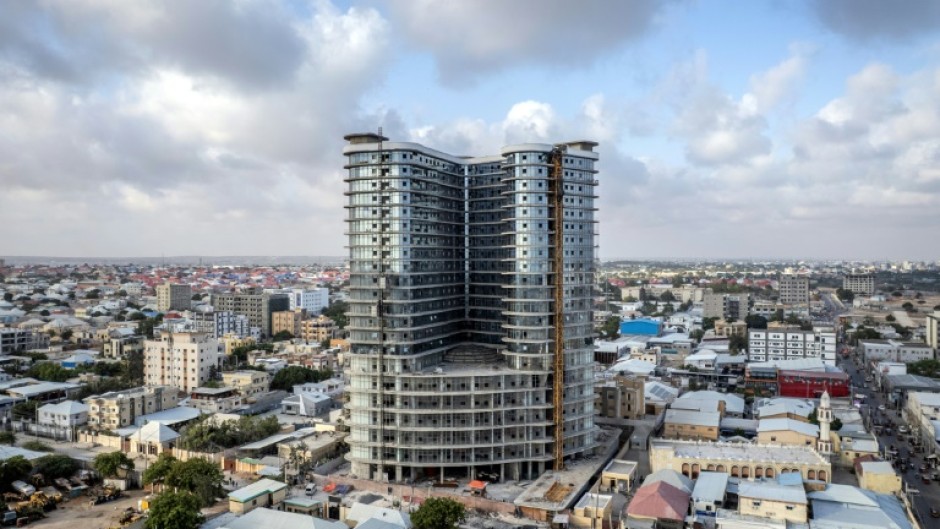
MOGADISHU - Mogadishu is rising, literally, from the ashes of decades of war. Pavements remain scarred by bullet holes and ruined buildings still line many streets, but the city's cacophony is now one of construction, not destruction.
The east African nation saw civil war in the 1990s mutate in the 2000s into an Islamist insurgency that still threatens much of the country.
Almost 70 percent of Somalia's population is defined as "multidimensionally poor" by the United Nations -- tracking education, health, living standards, services and inclusion.
But for the first time in decades, the three million inhabitants of the capital Mogadishu -- relatively well-protected from the conflict still raging just a couple of hours outside the city -- are witnessing a building boom.
Masonry, metal girders and piles of sand are everywhere along the pavements.
As builders toiled on a new multi-storey building on the main shopping street, Makkah Almukarramah Avenue, resident Habib Farah pointed out its big glass windows.
It is a new phenomenon in the city, he said, because for the first time in decades "they are not afraid of shattering".
The construction business is largely unregulated, and reliable statistics are rare -- but in June Mogadishu's mayor told the BBC more than 6,000 buildings had been constructed in five years.
The government says the improved security is thanks to a new system of checkpoints.+
As in many growing cities, gentrification and inequality are a growing problem for the poor, however.
Wealthy officials and foreigners may enjoy increased security and living standards, but "that is completely different from the day-to-day experience of people in other parts of the city", said Mahad Wasuge, from think tank Somali Public Agenda.