
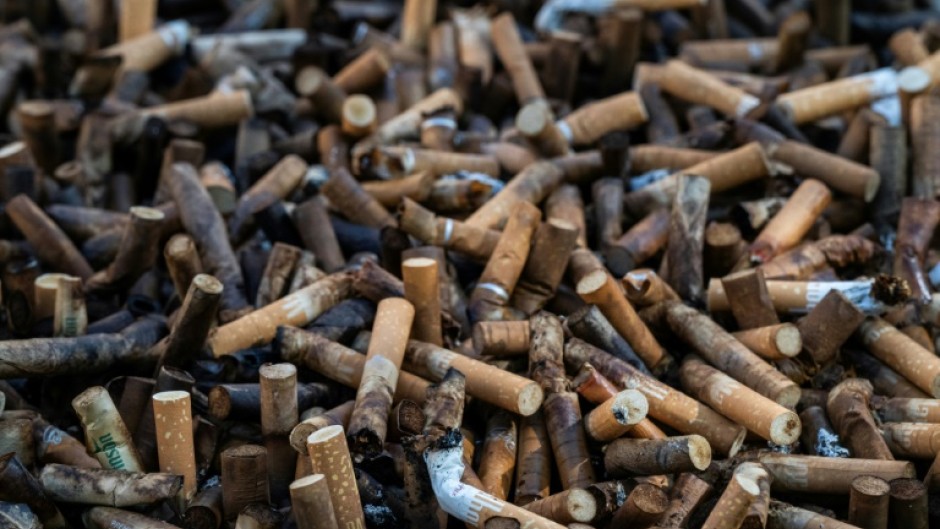
GENEVA - Next week's global conference on tobacco control will consider what to do about the sheer volume of cigarette butts trashing the planet, with some recommending banning them completely.
"The best thing that we could see for the environment is getting rid of filters altogether," Andrew Black, acting head of the secretariat of the World Health Organization Framework Convention on Tobacco Control (FCTC), said Thursday.
Plastic cigarette filters are the world's most littered item, leaching toxic chemicals into the environment and breaking down into microplastics -- while doing very little for the smoker, the secretariat said.
The 11th conference of the parties to the FCTC is being held in Geneva from November 17-22.
The WHO warned Wednesday that the tobacco industry was trying to infiltrate and undermine the conference.
Black said that, among other topics, the gathering would look at the environmental damage wrought by the tobacco industry and its products.
"An estimated 4.5 trillion cigarette butts are littered each year worldwide, making them the most common form of litter on the planet," he told reporters.
"These discarded butts are toxic and a significant source of plastic pollution, due to their filters, which do not biodegrade."
Furthermore, plastic filters "don't provide any meaningful increase in the safety of cigarettes", he said.
Rudiger Krech, the WHO's environment and climate change chief, said it was "high time to ban those plastics... because they are the highest pollutants in waters" and are "contaminated also with toxicants", he told a press conference.
Ultimately, it will be down to countries what measures they want to take.
To date, around 180 states have ratified the FCTC, which came into effect in 2005.
The landmark treaty brought in a package of tobacco control measures, including picture warnings on cigarette packets, smoke-free laws and increased taxes.
The conference will take decisions that will set the trajectory of the global tobacco epidemic for future generations, said Black.