
WASHINGTON - The United States will move to impose 25 percent tariffs on steel and aluminium imports this week, the latest in a slew of trade levies he has announced.
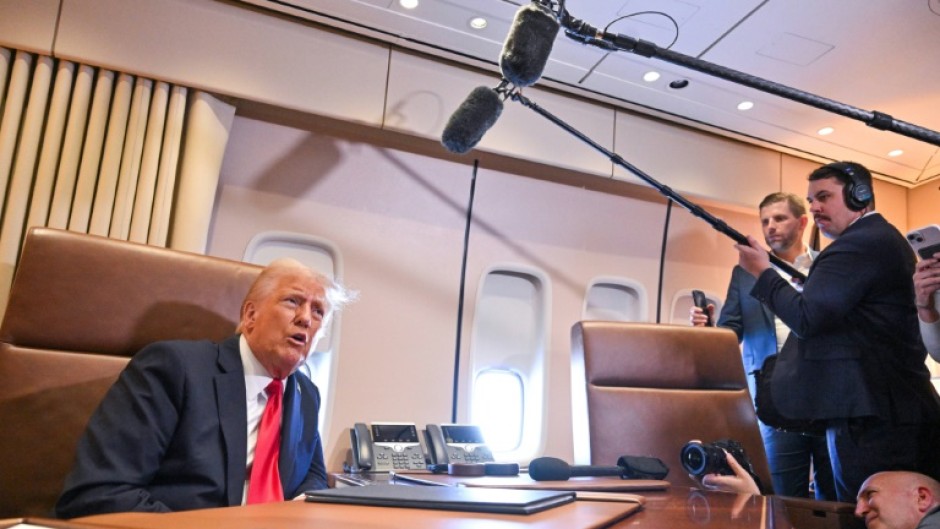
President Donald Trump told reporters aboard Air Force One that the tariffs, which he will announce on Monday, will apply to "any steel coming into the United States," adding this will also affect aluminium.
Trump imposed similar tariffs during his 2017-2021 presidency to protect US industries, which he believed faced unfair competition from Asian and European countries.
Canada -- which Trump has already threatened with tariffs -- is the largest source of steel and aluminium imports to the United States, according to US trade data. Brazil, Mexico and South Korea are also major steel providers to the country.
On Sunday, the Republican billionaire also said he would announce "reciprocal tariffs" to match his government's levies to the rates charged by other countries on US products.
"Every country will be reciprocal," Trump said, adding that he would make a detailed announcement on the tariffs on Tuesday or Wednesday.
The president has already shown his fondness for weaponising the United States' financial power, ordering tariffs on key trade partners China, Mexico and Canada soon after he took office.
He paused 25-percent levies against Canada and Mexico for a month after both countries vowed to step up measures to counter flows of the drug fentanyl and the crossing of undocumented migrants into the United States.
The tariffs against China went ahead, however, with products entering the United States facing additional levies of 10 percent since Tuesday.
Beijing responded with targeted tariffs on certain US products such as coal and liquefied natural gas, which will come into play on Monday.
The new Chinese tariffs cover $14-billion worth of US goods, while the tariffs announced by Trump cover $525-billion worth of Chinese goods, according to Goldman Sachs.
Trump has also pledged tariffs on the European Union and said that he would soon announce unspecified "reciprocal tariffs."