
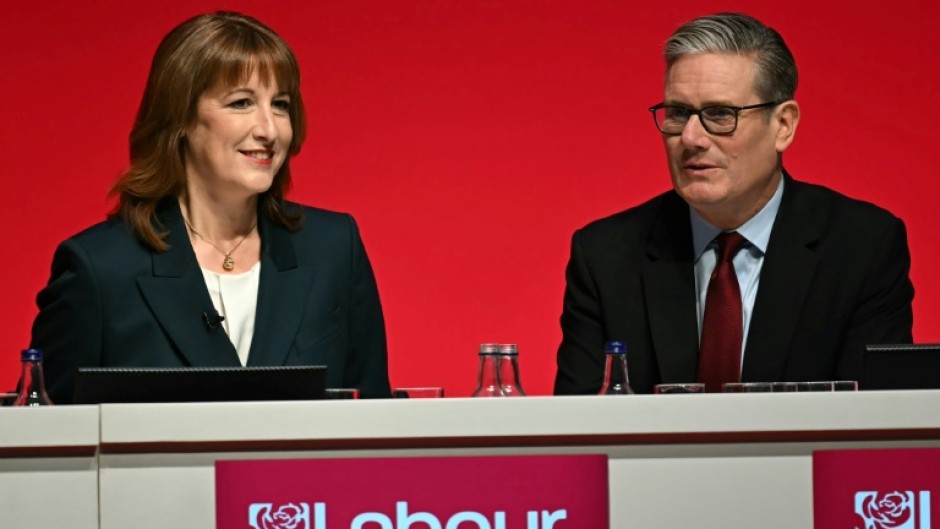
LONDON - Britain's centre-left Labour government is set to unveil a tax-raising budget to curb debt and fund public services, while aiming to reassure financial markets and voters alike.
Prime Minister Keir Starmer has vowed to reduce National Health Service waiting times and ease a prolonged cost-of-living crisis, hoping to strengthen Labour's appeal as hard-right Reform UK gains momentum in the polls.
But finance minister Rachel Reeves must balance pledges to support households with convincing investors the government has its finances under control.
"I will not return Britain back to austerity, nor will I lose control of public spending with reckless borrowing," Reeves said in a statement on the eve of the budget.
Reeves, whose official title is chancellor of the exchequer, has announced sweeteners such as above-inflation rises to the minimum wage and pensions, along with freezes on rail fares and prescription charges ahead of the budget.
But closing an estimated £20-billion ($26-billion) gap in public finances is expected to hinge on tax hikes that hit workers.
Many workers and small firms are concerned about how the budget will impact their cost of living and of cost of doing business.
"It's kind of been disastrous in the last two years, where, you know, the increases on food, the increases on duty, the wine increases, staff increases, and also people at home are feeling the pinch as well, so they're not going out as often," James Fitzegerald, a landlord of a west London pub called the Thatched House, told AFP.
"Things are only going in one direction, it's going downhill, and so we really need help from the government to make it viable," he said.
Britain faces a deficit near five percent of gross domestic product, elevated inflation and a stagnating economy as unemployment climbs.
Reports suggest that the UK's budget watchdog may also downgrade growth forecasts for each year of the current parliament, from its March projections.
Markets will be closely following Wednesday's speech. A poor response could trigger a sell-off of UK debt, driving up borrowing costs and complicating the government's spending plans.