
WASHINGTON - The US military said it would begin a blockade of all Iranian ports within hours, after peace talks in Pakistan collapsed with Washington blaming the Islamic republic's refusal to abandon its nuclear ambitions.
The announcement came despite a ceasefire agreed on Wednesday aimed at pausing the six-week war until April 22, with tensions centered on whether the United States can force Iran to reopen the strategic Strait of Hormuz, another of its key demands in the stalled negotiations.
"The blockade will be enforced impartially against vessels of all nations entering or departing Iranian ports and coastal areas, including all Iranian ports on the Arabian Gulf and Gulf of Oman," US Central Command said in a statement, adding that it would begin at 1400 GMT on Monday.
The statement said US forces would not impede vessels transiting the Strait of Hormuz to and from non-Iranian ports, and that further instructions for mariners would be forthcoming.
Iran's Revolutionary Guards had earlier warned they had full control of traffic through Hormuz and would trap any challenger "in a deadly vortex."
In a lengthy social media post, US president Donald Trump said his goal was to clear the strait of mines and reopen it to all shipping, but that Iran must not be allowed to profit from controlling the waterway.
Iran's parliament speaker Mohammad Bagher Ghalibaf, who led Tehran's delegation in Pakistan, said on returning home that the country would "not bow to any threats" from Washington, while navy chief Shahram Irani called Trump's blockade threat "ridiculous."
Tehran has already been restricting traffic through the strait -- a key route for global oil and gas shipments -- while allowing some vessels serving friendly countries such as China to pass. There have been unconfirmed reports it plans to charge tolls.
The US military said Saturday that two Navy warships had transited through the strait to begin clearing it of mines and ensure it was a "safe pathway" for tankers, a claim Tehran denied.
Iran's Fars news agency reported Sunday that two Pakistani-flagged oil tankers bound for the strait had turned back.
The collapse of the talks rattled an already tense region and raised fears of renewed fighting.
In a later Fox News interview, Trump again threatened Iran's energy infrastructure and warned he would impose a 50 percent tariff on Chinese imports if Beijing tried to help Iran's military.
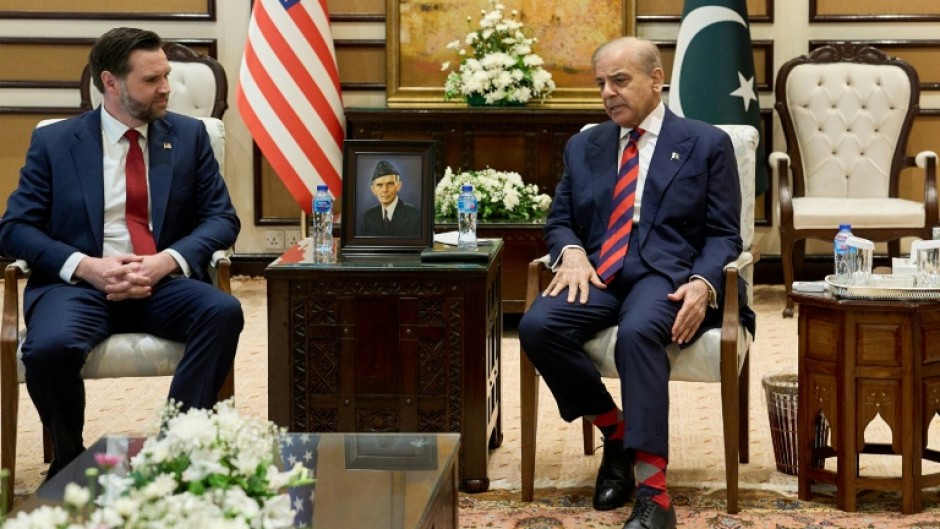
The US blockade appeared to be triggered by the failure of talks in Islamabad on ending the war.