
NEW YORK - The US military said it would begin a blockade of all Iranian ports on Monday, after talks between the warring sides in Pakistan collapsed, and despite the Iranian military warning that it would treat any such action as an act of piracy.
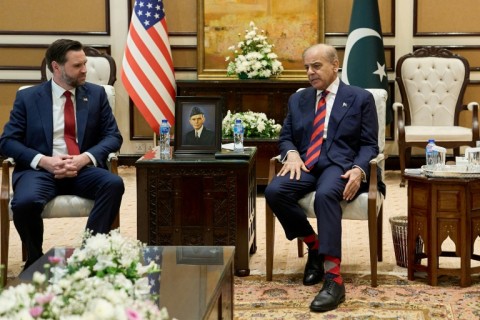
Trump had announced on social media he would blockade the strategic Strait of Hormuz trade route that he had previously demanded Tehran re-open fully, after Vice President JD Vance left negotiations with an Iranian delegation in Islamabad without a deal.
The US military said the blockade would begin at 1400 GMT, and apply to all ships leaving or seeking to dock at Iranian ports on either side of the key waterway.
With just hours before the deadline, however, it was unclear how the military would enforce such a blockade.
"Presumably, Trump's intent is to try to starve Iran of export revenue and compel Iran's main oil customers, particularly China, to pressure Tehran to end its blockage of the strait," think tank The Soufan Center said in its daily note.
Despite the threats, there was no indication that there would be an immediate resumption of the war, which came to a halt with a ceasefire that took effect last week after engulfing the region in violence.
Oil prices, which had tumbled with the truce, jumped around eight percent Monday, with both key WTI and Brent contracts topping $100 a barrel.
The weekend's failed talks dashed hopes of a swift deal to permanently end the war, which has killed thousands and thrown the global economy into turmoil since it began in late February.
Traffic through the strait, a key route for global oil and gas shipments, has been heavily restricted since the start of the war, with Iran only allowing through some vessels serving friendly countries such as China.
Uncertainty
"The blockade will be enforced impartially against vessels of all nations entering or departing Iranian ports and coastal areas, including all Iranian ports on the Arabian Gulf and Gulf of Oman," US Central Command said, adding it would begin at 1400 GMT on Monday.
US forces would not impede vessels transiting the strait to and from non-Iranian ports, it added.
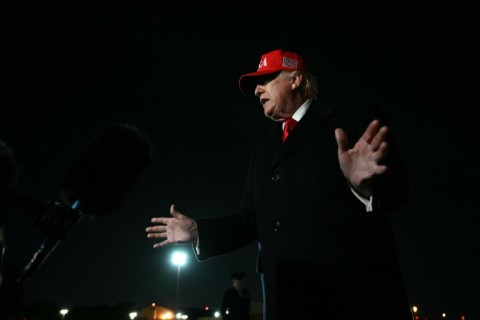
In a lengthy social media post on Sunday, Trump said his goal was to clear the strait of mines and reopen it to all shipping, but that Iran must not be allowed to profit from controlling the waterway.
Nicole Grajewski, an assistant professor at Sciences Po's Center for International Research, said a US blockade was "not a minor coercive signal" but could rather be considered an effective resumption of the war.
Iran's military command issued a statement branding the blockade a criminal act of piracy, and warned: "If the security of the Islamic Republic of Iran's ports in the waters of the Persian Gulf and the Arabian Sea is threatened, no port in the Persian Gulf and the Arabian Sea will be safe."
China, Washington's great power rival and a big importer of Iranian oil, also criticised the plan.
"The Strait of Hormuz is an important international trade route for goods and energy, and maintaining its security, stability, and unimpeded flow is in the common interest of the international community," foreign ministry spokesman Guo Jiakun said, urging Iran and the US not to reignite the war.
Russia, Iran's main international ally, said Foreign Minister Sergei Lavrov would visit his Chinese counterpart Wang Yi in Beijing on Tuesday and Wednesday this week.
Among Washington's NATO allies, much criticised by Trump for their reluctance to follow him to war, Spain's Defence Minister Margarita Robles said the planned naval blockade "makes no sense".
"It's one more episode in this whole downward spiral into which we've been dragged," she said.
And in a BBC radio interview, UK Prime Minister Keir Starmer said Britain will not join the blockade, adding the UK "is not getting dragged in" to the war.
French President Emmanuel Macron said that France and Britain would host a conference with countries prepared to join a "peaceful multinational mission" to secure the strait, but it would be "strictly defensive" and only operational once circumstances permit.
'We'll see'
Pakistan, which hosted the weekend's failed talks, has said it hopes to continue facilitating dialogue and has called on both sides to honour the fragile two-week ceasefire.
Iran's parliament speaker Mohammad Bagher Ghalibaf, who led Tehran's delegation in Pakistan, said Tehran would "not bow to any threats", while navy chief Shahram Irani called Trump's blockade "ridiculous".
The strait was far from the only friction point jettisoning efforts to end the war, which began when Israel and the US launched strikes on Iran, which retaliated by attacking Gulf and Israeli cities.
The US delegation in Islamabad -- led by Vance, special envoy Steve Witkoff and Trump's son-in-law Jared Kushner -- was frustrated by Iran's refusal to give up what it insists is a civilian nuclear programme.
Russia has offered to hold Iran's enriched uranium safely as part of any deal.
"The offer still stands, but has not been acted upon," Kremlin spokesman Dmitry Peskov told reporters.
Vance told reporters in Islamabad that Washington had made Tehran its "final and best offer", adding: "We'll see if the Iranians accept it."