
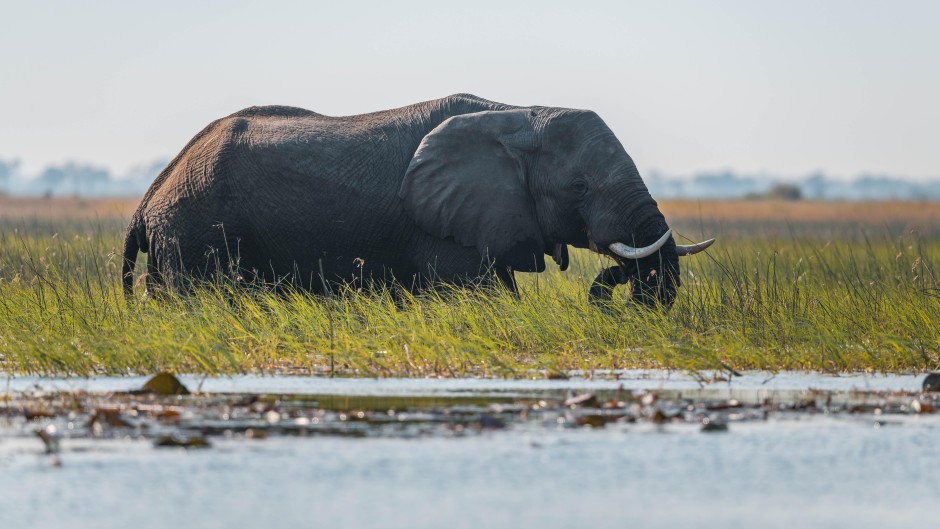
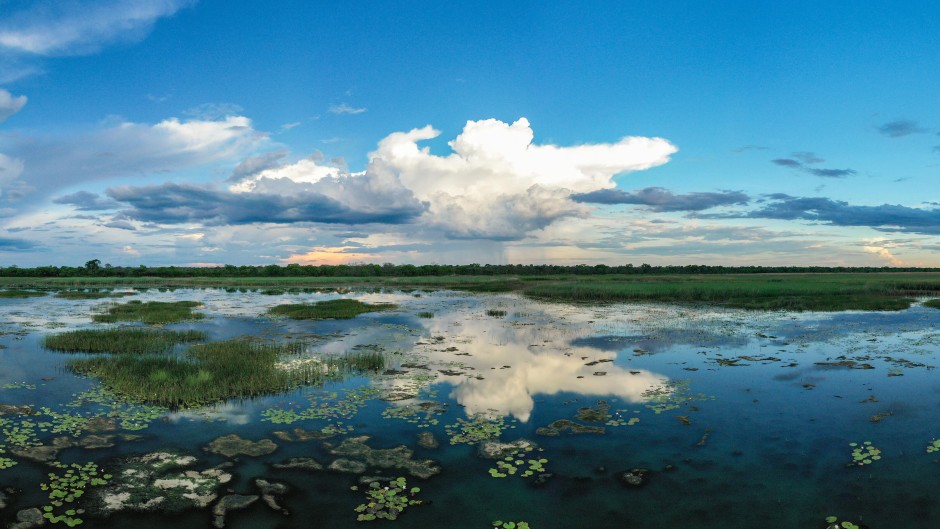
Washington - The Ramsar Convention on Wetlands and the government of Angola have designated the country’s first ever wetland , Lisima Lya Mwono.
Located in Angola’s central and southeastern highlands, the site’s name translates to “Source of Life” in the Luchaze language.
Since 2015, the National Geographic Okavango Wilderness Project (NGOWP) has been working with communities and governments to secure permanent, sustainable protection for the Lisima landscape and the greater Okavango Basin, which spans Angola, Namibia, and Botswana.
This newly named Ramsar site spans an area that is nearly 53,670 km2, and is home to the Angolan Highlands Water Tower (AHWT), which supplies 95% of the Okavango Delta’s water.
The NGOWP team’s research found the AHWT holds 423 km³ of water, the equivalent of nearly 170 million Olympic swimming pools. This Ramsar designation for the Lisima landscape and AHWT is critical to the future food and water security of millions of people across seven African countries, one of Africa’s largest remaining elephant populations, and some of the continent's most vibrant ecosystems.
Further, Ramsar designation for Lisima Lya Mwono is expected to heighten international awareness for this cultural and spiritual landmark that is the pride of Angola’s natural heritage. It also provides enhanced protection for the area, strengthens cooperation between countries that share its water resources, and creates opportunities for livelihoods around wetland management.
To make the case for Ramsar designation, and longer-term, formal protection of the landscape, the NGOWP team has combined rigorous science with traditional knowledge to demonstrate its importance.
The team’s efforts include mapping Africa’s second largest peatland ecosystem and carrying out extensive biodiversity surveys. These surveys have led to the documentation of 73 new species to academic science, at least 275 potentially new to science, and 300 never previously recorded in Angola.
Through the Okavango Eternal partnership with De Beers, operating across Angola, Namibia, and Botswana, the NGOWP team has been able to scale and accelerate groundbreaking and essential research that has helped facilitate this designation.
The Okavango Eternal partnership supports continued biodiversity surveys in the region, research and mapping analyses that help guide conservation priorities and management, stakeholder convenings with local communities and governments, and storytelling around the people and wildlife who depend on the freshwater resources of this Ramsar site.
This Ramsar designation also represents a major step toward one of the partnership’s key goals, formally protecting 5.4 million hectares around the Okavango Basin’s headwaters.
In addition to working toward formal systems of protection, the NGOWP team also actively works alongside community members to recognize and support local areas where biodiversity is already thriving under their care, ensuring traditional knowledge and conservation go hand-in-hand.
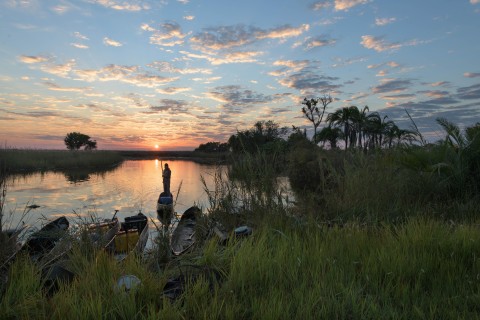
Ian Miller, Chief Science Officer, National Geographic Society said:
“The Ramsar designation for Lisima Lya Mwono in Angola has been years in the making. This is a testament to the power of collaboration between governments, organizations and local communities who have stewarded this ecosystem for millennia, and our partners through Okavango Eternal.
Steve Boyes, National Geographic Explorer and Leader of NGOWP said:
“The Luchaze people of the eastern Angolan Highlands have been in the business of clean air and freshwater for millennia. To them, the source lakes and forests of the Lisima Lya Mwono landscape are sacred.
Kerllen Costa, National Geographic Explorer and Country Director, Angola, NGOWP said:
“The declaration of Lisima Lya Mwono as Angola’s first Ramsar site is a huge moment of pride and celebration of Angola’s unique natural heritage. It is validation and recognition not merely of the beauty of the country’s natural wonder, but of the commitment of the local communities – who have been the true Guardians of this landscape for millennia – and that of the Angolan government.
Sandrine Conseiller, CEO, Brands and Diamond Desirability, De Beers Group:
“Achieving Ramsar designation in Angola is a moment of immense pride for the Okavango Eternal partnership. Over the past five years, De Beers has worked with National Geographic in Angola, Botswana and Namibia to support the on-the-ground delivery of science, training, community engagement and advocacy that have helped make this milestone possible.