
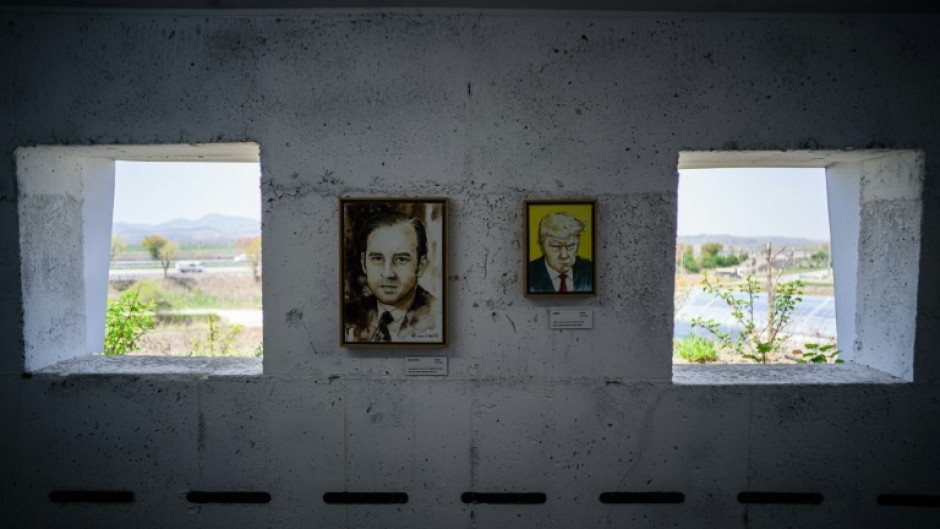
SEOUL - Reclining on sofas at a South Korean cafe, customers sip iced Americanos as they gaze past barbed wire fences and watchtowers at the mountains of North Korea.
Daonsoop cafe is so close to the North Korean border that to obtain the building permit, its owners had to construct the property with a bunker and fortified positions for tanks.
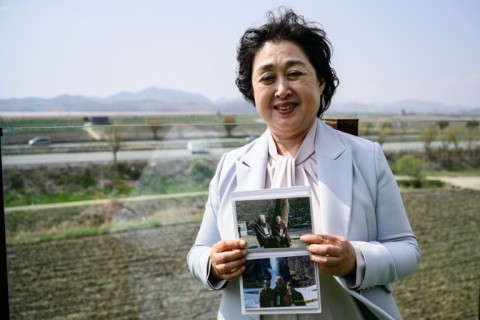
Founder Lee Oh-sook and her husband, both the children of North Korean refugees, built the cafe less than two kilometres from the border in Paju, seeking proximity to their ancestral homeland.
"From here, you can see North Korea, so close but inaccessible... Our parents always hoped to return to their homeland, but they died before realising this dream," 63-year-old Lee told AFP.
"We chose to settle here to think of them more often."
The two countries are technically still at war as the 1950-1953 conflict ended in an armistice rather than a peace treaty, and South Korea still refers to the border as the "front line".
Below the cafe's bay windows runs the Jayu-ro motorway, or "Freedom Road", which in an ideal future would link Seoul to Pyongyang, but currently stops at the Reunification Bridge near the border.
The Imjin river, which separates the two Koreas, runs alongside the motorway, while a sign in a military-controlled border area warns that "trespassers may be treated as an enemy or suspect and shot".
Every night, giant loudspeakers across the border in North Korea broadcast blood-curdling sounds as part of a noise campaign emblematic of the two countries' steadily declining ties.
The soundtrack of wolf howls, screams and ghostly creaks is so powerful it rattles the cafe's windows.
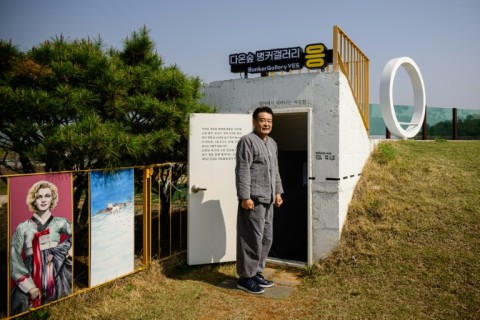
The cafe also attracts North Koreans who have defected to the South. During family holidays such as Seollal (Lunar New Year) and Chuseok in the autumn, they can look across to their homeland from its terrace.
On the other side of the border, North Korean farmers go about their business, burning rice fields at the end of winter in a polluting agricultural practice eradicated in the South.
The pungent smoke billows across the border and envelops the cafe, but some customers, indifferent like many South Koreans to their northern neighbour, are unaware of the cause.
"It looks so calm and peaceful right now, but many visitors don't know that the North is just across the road, so when they find out, they're surprised," Lee said.
"Most people forget that the country is divided and this reality is normalised."