
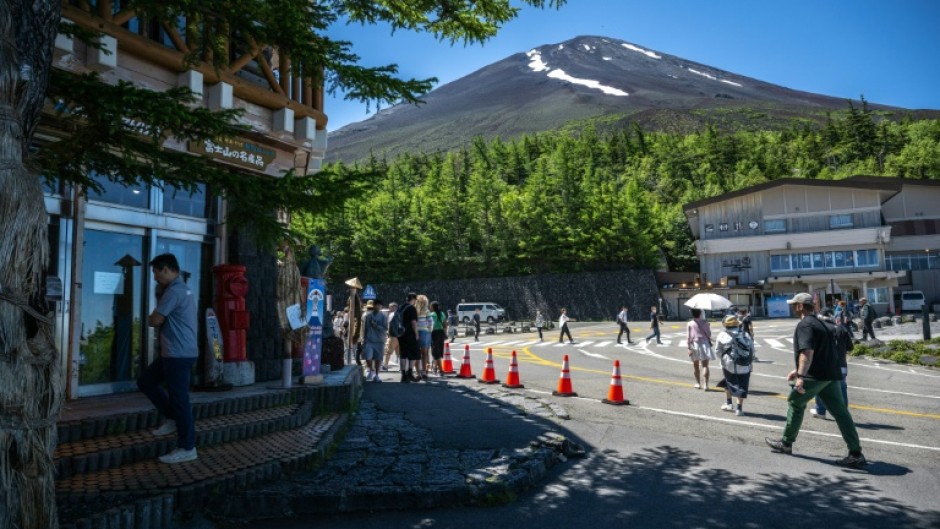
TOKYO - Mount Fuji's summer climbing season begins on Monday with new crowd control measures on the Japanese volcano's most popular hiking trail to combat overtourism.
An entry fee of 2,000 yen ($13) plus an optional donation will be charged for those taking on the Yoshida Trail, and numbers will be capped at 4,000 per day.
Online reservations for the popular path have also been introduced for the first time this year by authorities concerned about safety and environmental damage on Japan's highest mountain.
Record tourist crowds are flocking to Japan post-pandemic, with many wanting to see or scale Mount Fuji, which is covered in snow most of the year but draws more than 220,000 visitors each July-September climbing period.
Regional officials have raised concerns linked to overcrowding on the mountain, which is a symbol of Japan and a once-peaceful pilgrimage site.
Many climb through the night to see the sunrise from the 3,776-metre (12,388-foot) summit.
Some sleep on the trail or start fires for heat, while many attempt to complete the hike without breaks, becoming sick or injured as a result.
The new measures were introduced "first and foremost to protect lives" of climbers, not to block tourists from coming, governor Kotaro Nagasaki of Yamanashi prefecture recently told reporters.
Each summer, reports in Japanese media describe tourists climbing Mount Fuji with insufficient mountaineering equipment.
The active volcano has three other main routes that will remain free to climb.
But the Yoshida Trail -- accessed from Tokyo relatively easily -- is the preferred option for most holidaymakers, with around 60 percent of climbers choosing that route, according to official data.
Mount Fuji is about two hours from central Tokyo by train and can be seen for miles around.
The mountain has been immortalised in countless Japanese artworks, including Hokusai's world-famous "Great Wave".
Japan last year attracted over 25 million tourists from abroad, in part buoyed by the lifting of pandemic-era border restrictions. Its tourism chief said last month that its ambitious goal of luring 60 million foreign tourists a year was well within reach.