
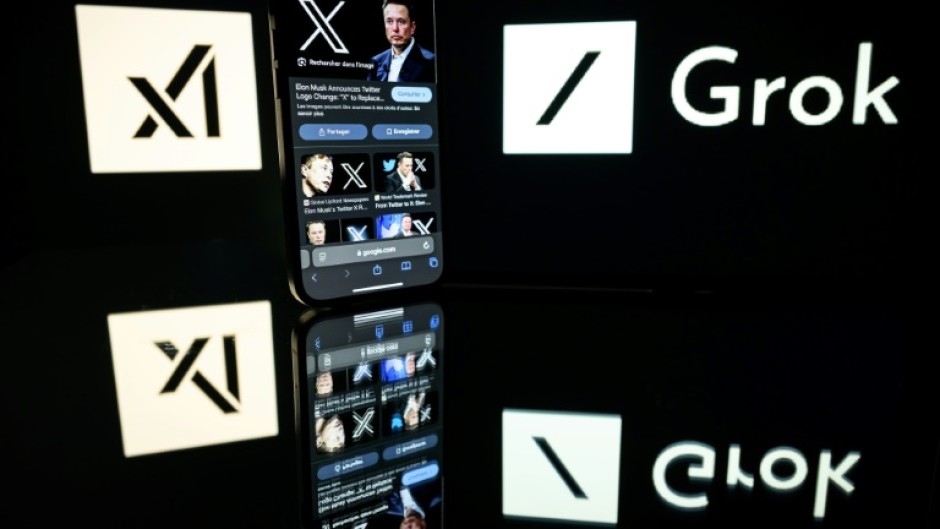
SAN FRANCISCO - As misinformation exploded during India's four-day conflict with Pakistan, social media users turned to an AI chatbot for verification -- only to encounter more falsehoods, underscoring its unreliability as a fact-checking tool.
With tech platforms reducing human fact-checkers, users are increasingly relying on AI-powered chatbots -- including xAI's Grok, OpenAI's ChatGPT, and Google's Gemini -- in search of reliable information.
"Hey @Grok, is this true?" has become a common query on Elon Musk's platform X, where the AI assistant is built in, reflecting the growing trend of seeking instant debunks on social media.
But the responses are often themselves riddled with misinformation.
Grok -- now under renewed scrutiny for inserting "white genocide," a far-right conspiracy theory, into unrelated queries -- wrongly identified old video footage from Sudan's Khartoum airport as a missile strike on Pakistan's Nur Khan airbase during the country's recent conflict with India.
Unrelated footage of a building on fire in Nepal was misidentified as "likely" showing Pakistan's military response to Indian strikes.
NewsGuard's research found that 10 leading chatbots were prone to repeating falsehoods, including Russian disinformation narratives and false or misleading claims related to the recent Australian election.
When AFP fact-checkers in Uruguay asked Gemini about an AI-generated image of a woman, it not only confirmed its authenticity but fabricated details about her identity and where the image was likely taken.
Grok recently labelled a purported video of a giant anaconda swimming in the Amazon River as "genuine," even citing credible-sounding scientific expeditions to support its false claim.
In reality, the video was AI-generated, AFP fact-checkers in Latin America reported, noting that many users cited Grok's assessment as evidence the clip was real.
Such findings have raised concerns as surveys show that online users are increasingly shifting from traditional search engines to AI chatbots for information gathering and verification.
The shift also comes as Meta announced earlier this year it was ending its third-party fact-checking program in the United States, turning over the task of debunking falsehoods to ordinary users under a model known as "Community Notes," popularised by X.
Researchers have repeatedly questioned the effectiveness of "Community Notes" in combating falsehoods.
Human fact-checking has long been a flashpoint in a hyperpolarised political climate, particularly in the United States, where conservative advocates maintain it suppresses free speech and censors right-wing content -- something professional fact-checkers vehemently reject.
AFP currently works in 26 languages with Facebook's fact-checking program, including in Asia, Latin America, and the European Union.
The quality and accuracy of AI chatbots can vary, depending on how they are trained and programmed, prompting concerns that their output may be subject to political influence or control.