
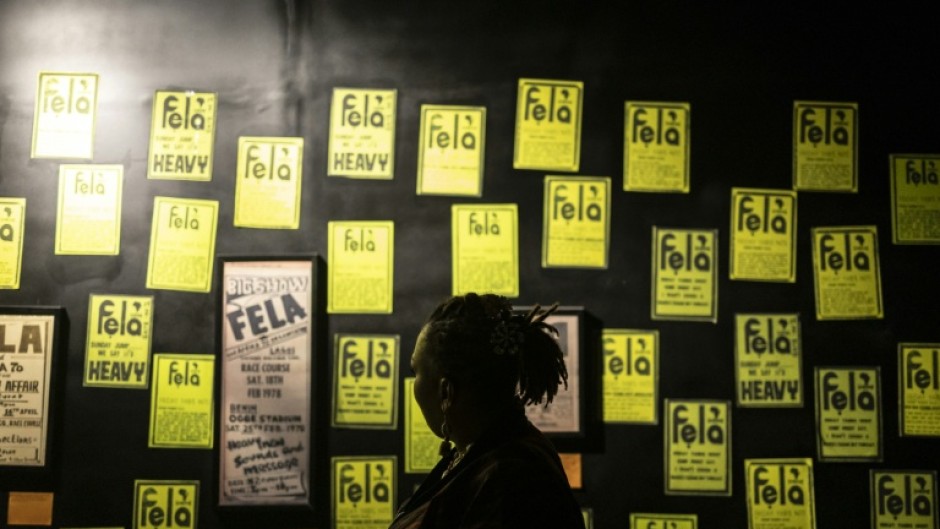
LAGOS - The "King of Afrobeat", "Black President", activist and legendary musician Fela Kuti has returned to his hometown and Nigeria's cultural capital Lagos through a landmark exhibition that celebrates his life and legacy.
The "Afrobeat Rebellion" exhibition, organised by the French Embassy and the Kuti family, builds on one held in Paris in 2022 and coincides with the launch of the week-long "Felabration" festival that honours the musician every October.
"The Paris exhibition was outstanding, but to have it here at home feels so special," said Papa Omotayo, a Nigerian architect who helped to organise the Lagos event.
"And then there were some more local artefacts that were able to be gathered locally here by collectors," he added, speaking at the opening night on Sunday evening.
Designed as an "immersive multi-sensory journey" through Fela's life, music and political ideas, the exhibition recreates the scenes he inhabited, from his "Kalakuta" commune to his Afrika Shrine venue, layering archived objects, photographs, multimedia installations, and, of course, a soundtrack.
In the 1970s, the multi-instrumentalist and full-of-life performer invented Afrobeat: a mixture of jazz, funk and African rhythms.
Fela "is revered abroad, like a giant, like a saint, but back home even the government don't see the essence of his value," the musician's close friend Mabinuori Kayode Idowu told AFP.
Over time, the genre gave rise to afrobeats (with an "s"), a less politicised form of music that incorporated the bling of US hip-hop and is now championed by Nigerian superstars such as Davido, Burna Boy, Tems and Rema, who fill the world's largest venues.
Fela left an indelible musical mark, continued today by his musician sons Femi and Seun and his grandson Made, but he also earned a name as a prominent political figure known for his Pan-Africanist and socialist activism.