
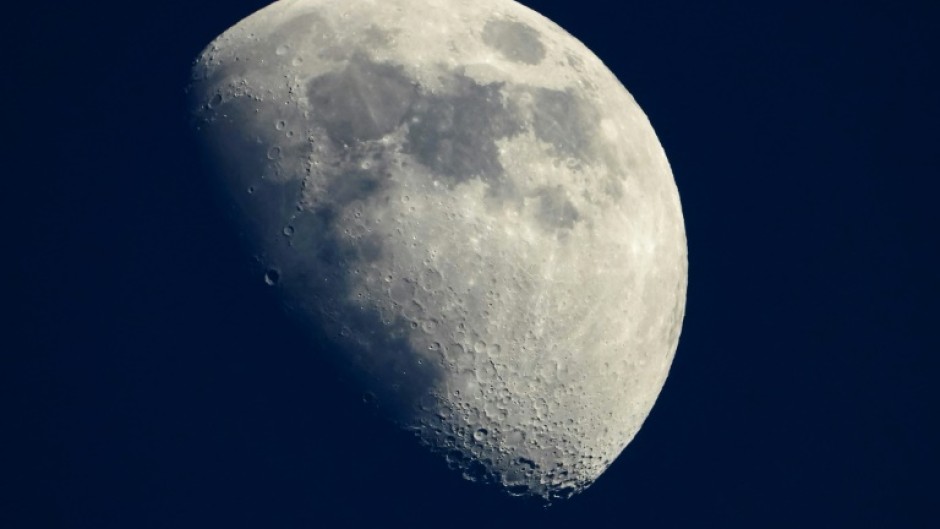
NEW YORK - Part of a SpaceX rocket approximately the size of a bus slammed into the Moon as predicted after a telescope in Chile captured evidence of a stream of debris.
The collision, which was not intentional, posed no danger to Earth, and is expected to have left a lunar crater in its wake that space agencies including NASA still hope to document.
Scientists anticipated the Falcon 9 upper stage was going to strike the lunar surface at approximately 0635 GMT on Wednesday.
And it did, the European Southern Observatory said on social media Wednesday, based on observations recorded by its Very Large Telescope.
The telescope "detected spectral lines," the observatory said, what it called "chemical fingerprints" of "sodium and lithium gas in the impact plume lasting for 5-10 minutes after impact."
"The sodium likely originated from the lunar soil, whereas the lithium could come from the rocket itself," the post continued, adding that the team would offer more details following fuller analysis.
Scientific observers had deemed the 8,690 kilometres per hour crash inevitable.
"I have Sir Isaac Newton's personal assurance that it did indeed hit the moon, there's no way for it to have escaped," Jonathan McDowell, an astrophysicist and space analyst, told AFP.
NASA and its Lunar Reconnaissance Orbiter probe and South Korea's Pathfinder Lunar Orbiter were planning to take images of the site after impact, but it could take days to receive that information.
Linking to the European Southern Observatory's post, Benjamin Fernando of Los Alamos National Laboratory in New Mexico told AFP "I can confirm that the impact did occur."
Fernando was the lead author of a recent paper on the anticipated impact, which had estimated the spacecraft weighed approximately 8,800 pounds (4,000 kilograms) on impact, assuming all of its propellant was spent.
Prior to the collision, NASA had emphasised: "there is no danger to Earth."
"NASA scientists are planning to collect lunar data from the event and refine techniques for tracking objects in space," the US agency said.
- by Maggy Donaldson (AFP)