
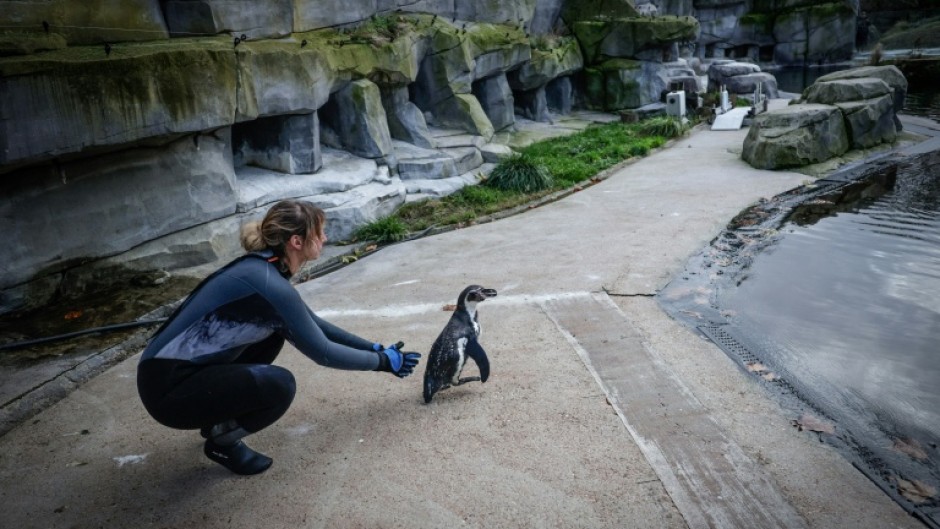
A curious seagull strolled nonchalantly through the penguin enclosure at a zoo in Paris.
It looked harmless enough but the seagull could pose an existential threat to the penguins with a devastating bird flu outbreak killing hundreds of millions of birds across the world over the last few years.
That is why 41 Humboldt penguins were queued up near their pool in the Paris Zoological Park on a cold December morning at the start of influenza season.
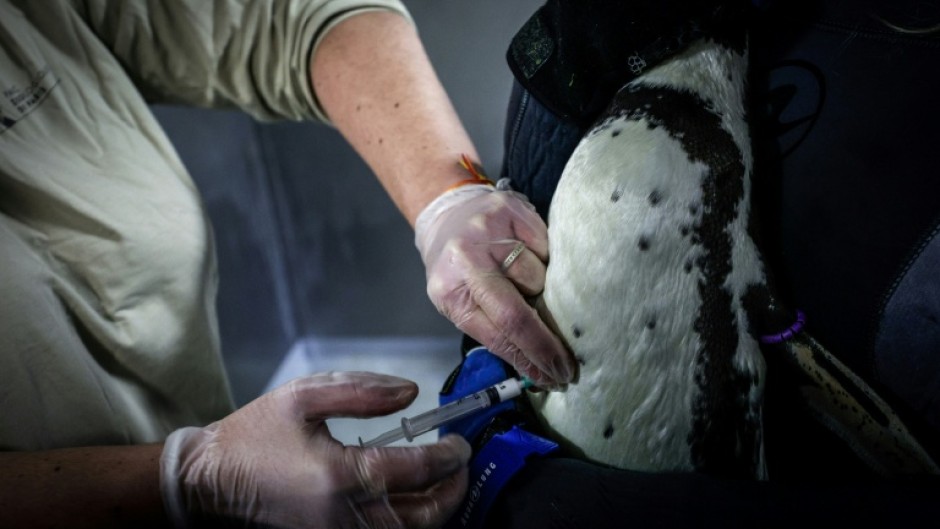
A zookeeper whispered some reassuring words to one called Cissou as a veterinarian injected him with his annual bird flu vaccine shot.
After getting his jab, Cissou waddled off back into his enclosure.
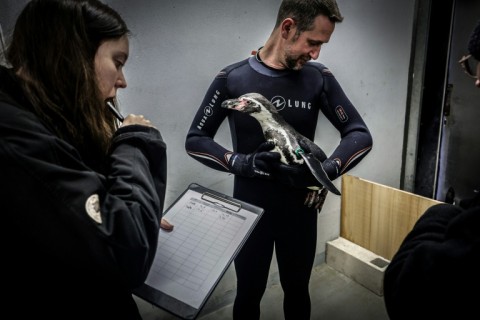
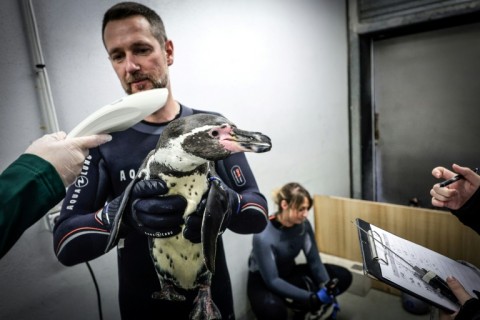
Around 10 zoo staff took the chance to weigh and measure the penguins, collecting feathers, taking blood samples, examining their feet and checking their microchips.
In a month, the young penguins born this year will get a booster shot.
The zoo, which is in Vincennes park in the east of the French capital, has never detected a case of bird flu.
But it is home to wild birds such as crows, magpies, geese and parakeets, and an outbreak would be catastrophic for the zoo animals.
Last week French health authorities warned this bird flu season is already looking like it will be the worst in a couple of years.
- Decades of experience with jab -
Bird flu was detected in Antarctica for the first time early last year, causing concern among scientists about the fate of the penguins there.

Sylvie Laidebeure, a vet at the Paris zoo, told AFP "these animals are generally threatened in their natural habitat" as she inserted a needle into the breast of a Humboldt penguin, which are classified as vulnerable by the International Union for Conservation of Nature.
Laidebeure said the zoo carries out a "risk-benefit ratio" before vaccinating each species.
There can be problems such as inflammatory reactions and "restraining them is also extremely stressful for the birds", she said.
The only birds to get a jab at the zoo are those that live outdoors, or in enclosures with mesh that could allow them contact with wild birds. These include hornbills, vultures, rheas and ostriches, marabou storks and cranes.
Though the practice remains rare across Europe, France has been vaccinating birds against avian influenza in zoos since 2006.
That was long before it became the first European country to vaccinate ducks in farms nationwide in 2023, using the same vaccine at a different dosage.
That extra two decades of experience has led to several scientific publications, Laidebeure said.
It also helped scientists learn how well the vaccine worked on different species and showed that it was safe and effective.
"I think that helped reassure people" before it was rolled out on farms, Laidebeure said.
By Bénédicte Salvetat Rey