
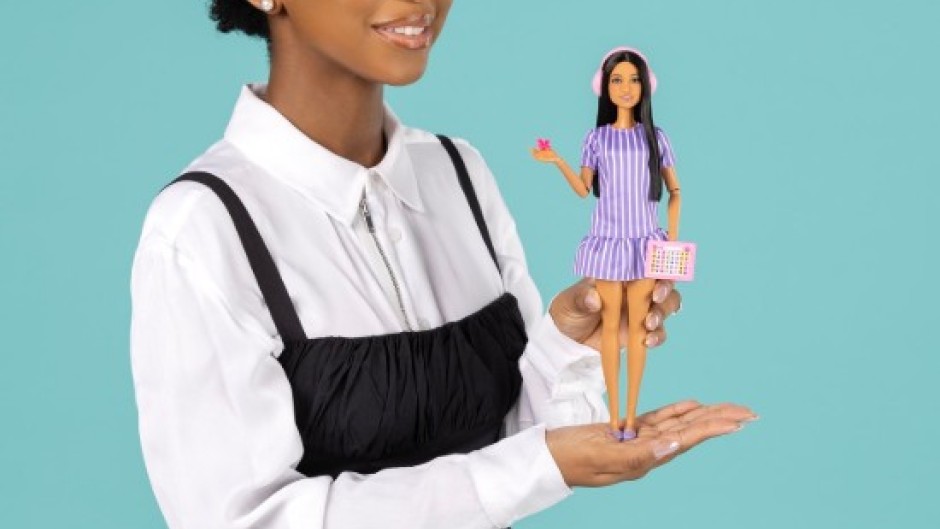
JOHANNESBURG - Social media has been abuzz after media personality Nandi Madida unveiled an autistic Barbie alongside her six-year-old daughter.
The doll forms part of Barbie’s broader “Fashionistas” inclusion range and was developed in collaboration with the Autistic Self Advocacy Network (ASAN).
At face value, the doll appears to have no distinctive features, prompting questions about whether it adequately represents autism.
But Autism South Africa says that representation matters.
“It is important to emphasise that the autistic community is not a monolith,” says Autism South Africa’s National Training Coordinator, Leryke Kleynhans.
“We need to normalise that autism does not have a look."
READ: Barbie Story Book | 65 years of a plastic, fantastic life
However, the Barbie comes with a range of accessories that reflect tools commonly used by autistic people to cope with sensory and communication challenges.
These include noise-cancelling headphones, a fidget toy, and an AAC tablet, which represents communication differences and access needs.
Kleynhans says these items are widely used for sensory regulation support and help to illustrate the diversity of autistic experiences.
“Autism is an invisible disability,” she adds, noting that many autistic children -- and adults -- may feel affirmed and “seen” when encountering such representation in everyday spaces like toy stores.
She says the doll also creates opportunities for meaningful conversations about autism that move beyond stereotypes.
Girls and women, Kleynhans notes, have historically been underdiagnosed, largely due to the misconception that autism primarily affects boys and men.
While some Barbie dolls retail for more than R1,000, the autistic Barbie is priced at R299 at Toys R Us.
“Each individual and family will need to decide what is affordable and worthwhile for them,” says Kleynhans.
“But from a social impact perspective, representation still matters, especially in communities where disability-related support is already limited.”