
NAIVASHA - Coaxed and tugged by rangers, a blindfolded giraffe totters into the specialised vehicle that will transport it away from an increasingly hostile environment to a new home in Kenya's eastern Rift Valley.
Such relocations are a last resort when human activities or climate change threaten the survival of wildlife or peaceful coexistence with humans, say conservationists.
But the complex operations, overseen by Kenya Wildlife Service (KWS), are becoming more and more frequent in the east African country.
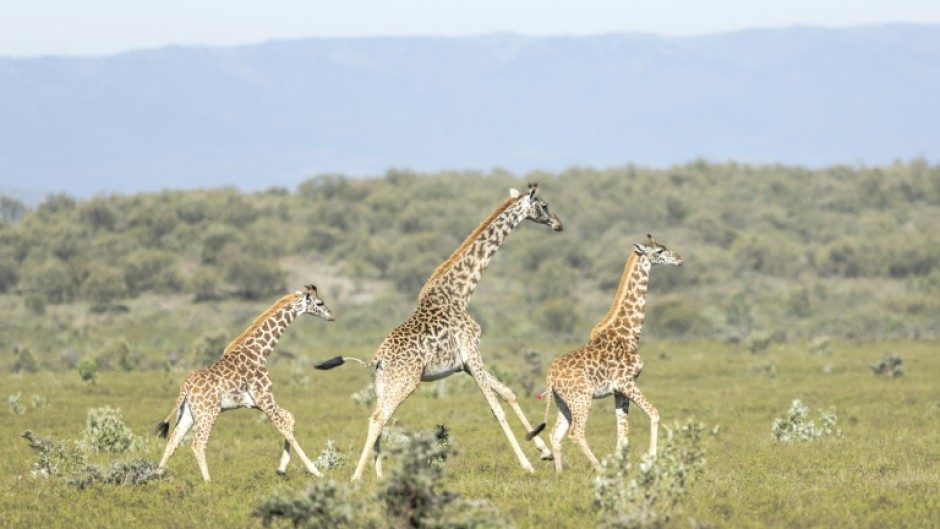
In recent weeks, hundreds of giraffes, zebras, and antelopes have been removed from the Kedong Ranch, on the shores of tourist hotspot Lake Naivasha.
The land had been left in its natural state, but over the years has been sold and subdivided into plots for real estate development, preventing the animals from grazing or using the natural corridor between Mount Longonot and Hells Gate.
"The animals began to suffer. They were stranded, stressed," said KWS's Patrick Wambugu, describing the construction of fences blocking the giraffes' route.
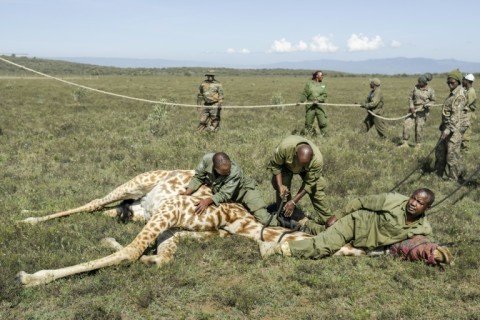
On Sunday, Wambugu's team relocated five giraffes in an operation that required dozens of people, trailers, a plow -- and even a helicopter that tracked the animals across the plains, before shooting them with tranquiliser darts.
KWS veterinarian Dominic Mijele, who was part of the operation, told AFP the giraffe is the most difficult animal to move, the risks "numerous".
The long-limbed creatures face deadly falls after being tranquilised and, despite their gentle appearance, can deliver a fierce kick to those trying to help.
They are also highly sensitive to anaesthesia and so cannot be kept sedated for long, a result of their unique build -- "the heart to the brain is quite long," Mijele explained.
As such, the rangers have to physically immobilise the creatures before they can be blindfolded and transported.
Once secured, the convoy travels the roughly 30 kilometres separating the ranch from their new home in the Oserengoni private reserve.
Once in there, a veterinarian will observe them for a week, although they usually establish their territory within two days.
"We hope that in the coming years the numbers will multiply, and they will be able to thrive in this landscape," said Mijele.