
ROME - Children across Italy are returning to classrooms after a traditional three months off school -- the longest summer holiday in Europe.
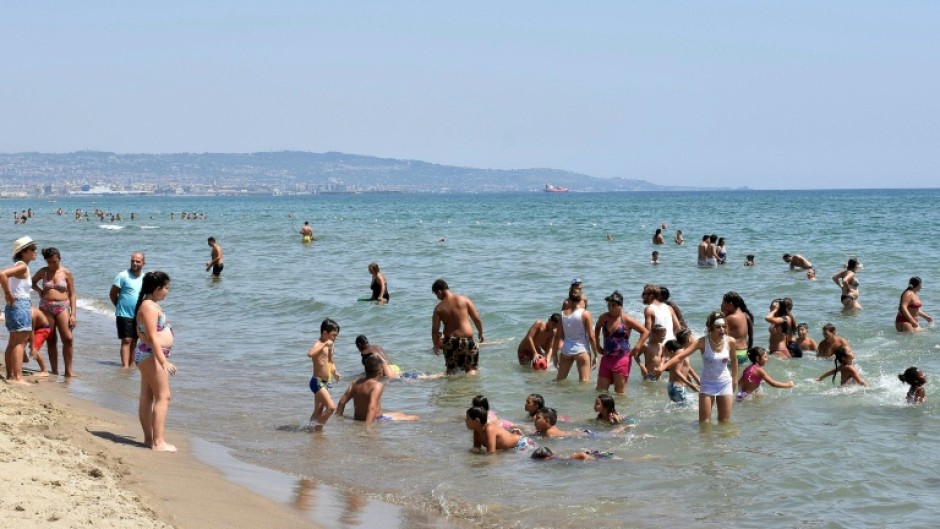
But just as frazzled parents sigh with relief, teachers say climate change is making it too hot to study safely, and some have called for classes to be postponed.
"The sun beating down on small classrooms creates a greenhouse effect," creating "intolerable temperatures", said Antonino Rinaldo, a school administrator in Sicily's Palermo.
Heatwaves are becoming more intense and frequent due to human-caused climate change, yet only six percent of Italy's schools have air conditioning, according to the education ministry.
While in some Italian regions temperatures are subsiding, conditions remain hot in the south.
Sweltering heat in May and June is a struggle too, particularly for students sitting end-of-year exams, according to the head of teachers' union ANIEF, Marcello Pacifico.
"We cannot continue with the same school calendar as 50 years ago when the climate has changed," Pacifico said.
The heat poses risks for teachers too, 55 percent of whom are aged 50 or over.
"If it is too hot, on top of endangering the health of our students, we can't guarantee the quality of the education" if students are unable to concentrate, Rinaldo said.
Back-to-school dates in Italy vary regionally, with lessons starting between September 8 and September 16.
In Sicily, where temperatures of 33C are expected next week, some schools have announced they will finish up at midday initially, Rinaldo told AFP.
Sardinia last year called for a national debate on adapting classrooms to climate change and other regions are also experiencing heat stress in schools.
Temperatures will hover around 30C in major cities Bari, Bologna, Florence and Naples as classes fill.
"We need to think long and hard, not only in Italy, but also in Europe, because climate change is not just happening in Italy," Pacifico said.
According to the EU's Copernicus Climate Change Services, Europe has warmed twice as fast as the global average since the 1980s, and temperatures on the continent have increased year-round.
"Summer-like conditions now occur earlier in spring and last longer into autumn," senior scientist at Copernicus Francesca Guglielmo told AFP.