

January is the perfect time to reset, refocus, and commit to your personal and professional growth. It’s easy to feel like you’re already doing enough or under too much pressure to add “learning” to your New Year’s goals, but growth doesn’t have to mean more stress.
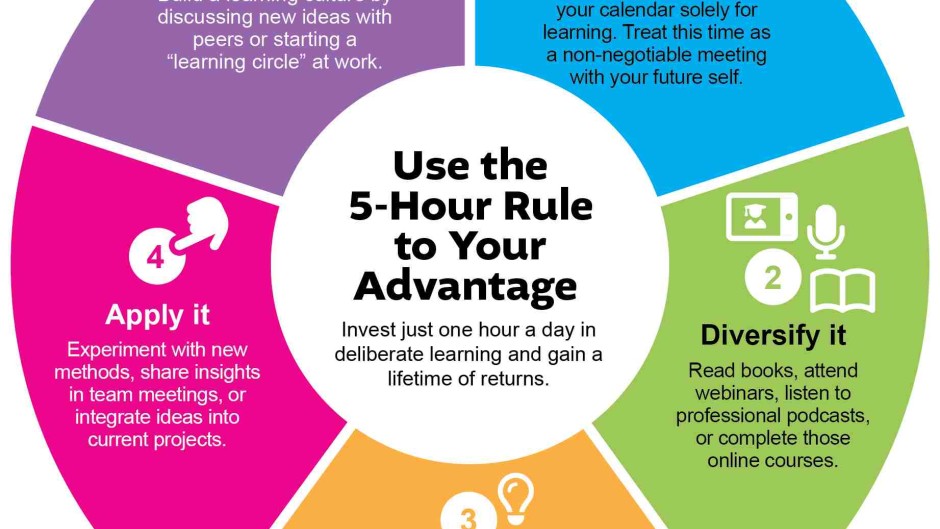
In fact, when approached intentionally, it can become one of the most rewarding parts of your week. That’s where the 5-hour rule comes in. Popularised by author Michael Simmons, this simple yet powerful principle encourages you to spend just five hours each week, about one hour a day, on deliberate learning.
Not multitasking or mindless scrolling, but focused time spent reading, reflecting, or practicing new skills. By making this small but consistent investment, you’ll not only stay ahead in a rapidly changing workplace, you’ll also reconnect with the intrinsic joy of learning.
Rather than surrendering your attention and energy to Big Tech algorithms, you’ll be cultivating your own growth on your own terms.
Learning from the greats
Some of the world’s most accomplished leaders live by the 5-Hour Rule. Bill Gates reads about 50 books every year. Oprah Winfrey attributes much of her success to a lifelong passion for reading and self-improvement. Elon Musk, love him or loathe him, famously taught himself rocket science through focused study and practice. And Warren Buffett says he spends up to 80% of his day simply reading and thinking.
These leaders demonstrate that no matter how demanding the schedule, setting aside time to learn leads to exponential growth, both personally and professionally.
Why learning at work matters more than ever
In the modern workplace, knowledge and skills have a shorter shelf life. Rapid advances in technology, changing market demands, and evolving organisational structures mean that learning agility is a key differentiator. Research shows that employees who continuously learn are more adaptable, innovative, and engaged.
“Learning in the workplace is not just about keeping up, it’s about staying relevant,” said Michael Gullan, CEO of G&G Advocacy, an eLearning consultancy that assists organisations with state-of-the-art workforce development. “Learning builds confidence, strengthens problem-solving skills, and encourages innovation by connecting ideas from different disciplines.”
How to apply the 5-Hour Rule at work
Putting the 5-Hour Rule into practice doesn’t mean enrolling in expensive courses or pursuing another degree. It’s about consistency, curiosity, and intentionality, not overcommitment. Many organisations already offer continuous learning programs that empower employees to upskill, reskill, and stay future-ready.
“If your place of work doesn’t provide access to online training and further development, look for relevant courses yourself,” adds Gullan. “Even a small investment in deliberate learning can elevate your performance and open new opportunities in your role.”
Building a learning culture
Imagine if every employee in your organisation set aside just five hours a week to learn. The collective effect would be transformative: greater innovation, stronger collaboration, and higher performance, all translating into a real competitive advantage.
This January, instead of setting fleeting resolutions, commit to lifelong learning. The 5-Hour Rule isn’t about adding more to your schedule. It’s about investing intentionally in your growth.
“The best professionals aren’t those who know the most—they’re the ones who never stop learning. The smartest investment any professional can make is in their own development. The world is changing faster than ever, and staying curious is the only way to stay relevant,” concludes Gullan.