
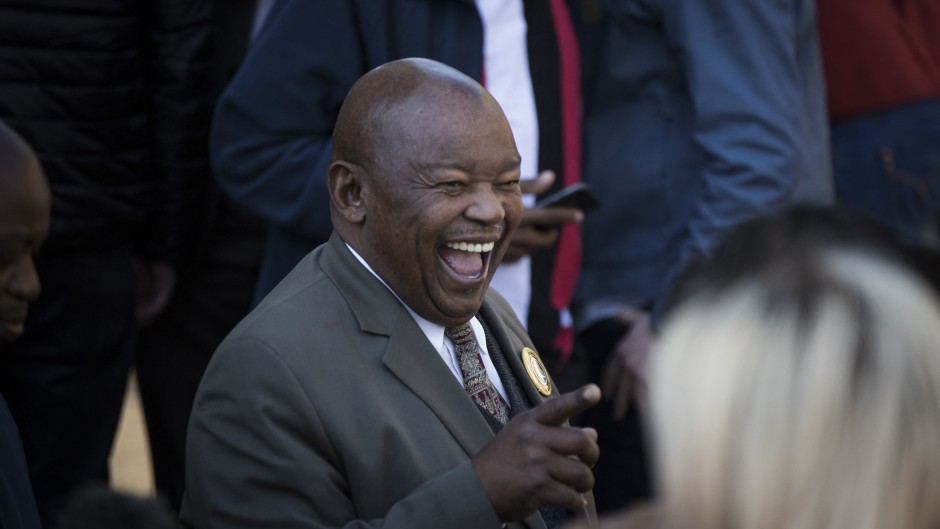
JOHANNESBURG - Congress of the People (COPE) leader and co-founder Mosiuoa "Terror" Lekota has been praised for his fearlessness and courage to speak the truth.
Lekota died at a Johannesburg hospital on Wednesday following a long illness.
Paying tribute to the former Minister of Defence, Seth Mazibuko, 1976 youth leader, described Lekota as a leader who was prepared to take the pain of being isolated.
“He was one of the strongest leaders of black consciousness, he was in the calibre of the likes of Saths Cooper and Muntu Myeza,” said Mazibuko.
Mazibuko said on Robben Island, they were assisted by the courage of people like Lekota.
“I will miss his Afrikaans. He spoke very good Afrikaans. Whenever we were fighting with the wardens on Robben Island, Terror would be sent as a frontline because he could speak their language,” Myeza remembered fondly.
President Cyril Ramaphosa said South Africa has lost a servant of the people whose life story is closely intertwined with our journey of struggle and the realisation of democracy.
“His life was one of resilience, courage, and steadfast belief in justice. We honour him especially for his principled dedication to non-racialism during our struggle and in a liberated South Africa.
“We deeply value his service to his home province where he served as Premier and to our Armed Forces and our national security, in his role as Minister of Defence,” said Ramaphosa in a statement.
READ | RIP Mosiuoa Lekota: 'History will forever remember him'
Anti-apartheid activist, Reverend Allan Boesak said Lekota was a pillar of strength in the struggle during the 1980s in the United Democratic Front.
“He has kept that honesty and courageous demeanour. He has kept that straight forwardness. He took it literally from the streets of protests and struggle into parliament. He was not afraid to tell the truth. I always admired his forthrightness.”
Boesak said Lekota’s political posture was driven by the memories of the struggle.
“His genuine sadness was that what we promised our people was so basically and fundamentally betrayed by those who got into power after 1994.”
In a statement, the EFF said Lekota’s political life reflected both the unity forged in the struggle against apartheid, the divisions that emerged in the democratic era over the direction of the country, and the necessity of strong robust opposition politics.
DA leader John Steenhuisen said Lekota was a patriot and a man of substance.
“From his activism on the ground to Robben Island to democratic politics, he dedicated all he had to give to the service of the South African people,” Steenhuisen said.