
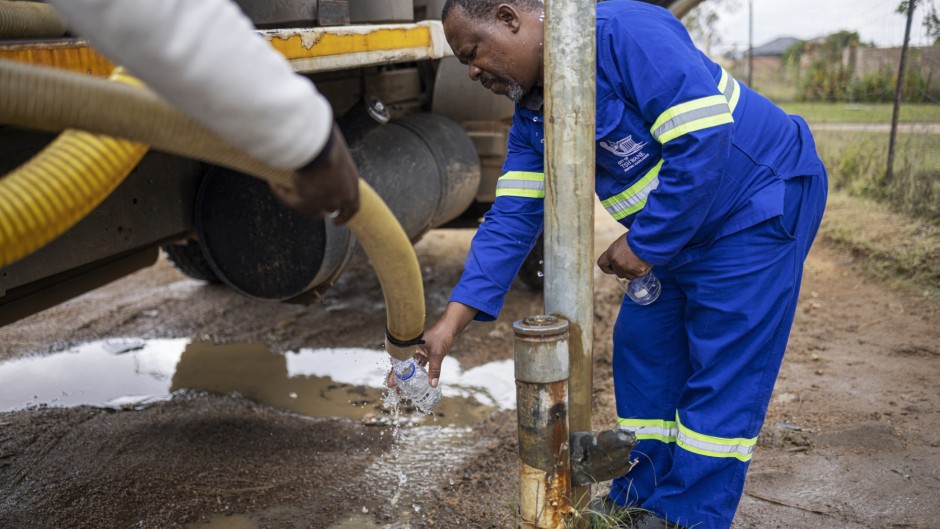
BRONKHORSTSPRUIT - The South African Human Rights Commission (SAHRC) says Gauteng has sufficient water resources to meet current demand, but the challenge lies in ensuring that water reaches households safely and reliably.
The City of Tshwane loses 39% of its usable water through leaks and deteriorating infrastructure.
The commission says these losses translate into significant financial costs for the municipality.
“It’s money that cannot be billed. It’s equivalent to R1.9-billion that the City of Tshwane is losing. The water is not reaching the people. That’s the impact it has on communities,” said SAHRC representative Khululiwe Sithole.
The commission is also concerned about the growing reliance on water tankers as a substitute for functioning infrastructure.
In 2024, Tshwane spent nearly R800-million on water tankers. However, residents in areas such as Bronkhorstspruit say emergency supplies are still not reaching everyone.
At the Ekangala Wastewater Treatment Plant, one of the city’s poorly performing facilities, concerns over failing wastewater systems and a shortage of technical skills have added to the crisis.
For 17-year-old student Nteboheleng Ramotsho, whose eczema makes access to clean water particularly important, the situation has made basic hygiene difficult.
“They say the water is not usable for drinking or doing anything. You cannot even bathe with the water. The water is just for flushing,” she said.
Residents also say the shortage has created opportunities for some businesses to exploit their desperation by increasing the price of water.
Civic organisation WaterCAN says communities are tired of the lack of accountability.
“People are tired, and the vote has shown it. We want to see accountability. In the next three years, we want to see people dismissed, fired or held accountable for those kinds of things,” said WaterCAN’s Ferrial Adam.
The SAHRC has called for urgent infrastructure interventions and greater accountability from the municipality.
It has warned that failure to address the crisis could result in litigation against municipalities.
- eNCA's Naomi Kobbie reports.