
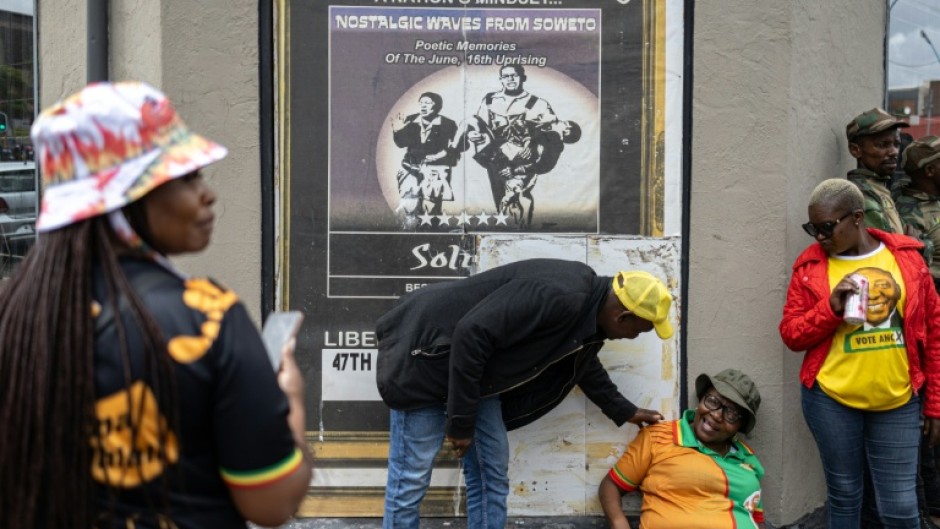
JOHANNESBURG - Half a century after an uprising that helped bring down apartheid in South Africa, little remains on the streets of Soweto to mark the blood spilled there.
The scarlet paint once meant to evoke the slaughter of June 16, 1976, in the poor township outside Johannesburg, has long disappeared from the pavements leading to the spot where police opened fire on protesting black schoolchildren, a turning point in the struggle against white-minority rule.
At least 176 people were killed, though some estimates put the death toll in the hundreds in the weeks that followed as the crackdown ignited a nationwide revolt.
The fading traces, said Seth Mazibuko, are more than a quirk of urban maintenance but symbolise a South Africa failing to honour the legacy of Soweto or deliver the future for which its children died.
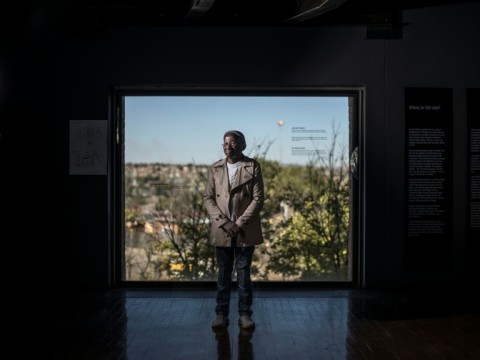
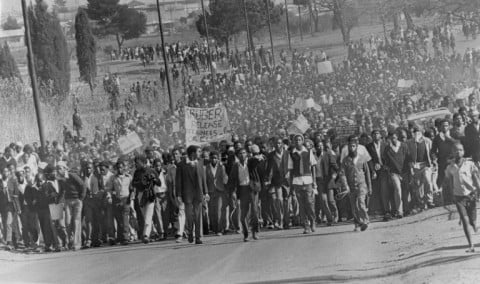
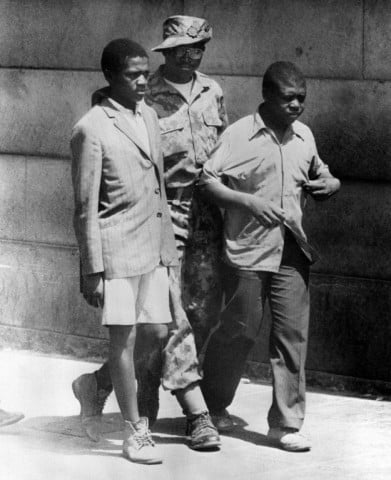
Aged just 16 at the time, Mazibuko helped organise the march by thousands of black students to protest being forced to study in Afrikaans, the language of the white-minority regime.
He was arrested afterwards and spent seven years behind bars, including in Robben Island prison, which held anti-apartheid leaders such as Nelson Mandela.
After the end of apartheid in 1994, the new democratic government declared June 16 as National Youth Day, a public holiday intended to honour the uprising.
But for Mazibuko, "the very respect of that day is not given."
"People get drunk to go and dance over death. That's the sad part of our history," he said.
'Distortion' of history
One of the most enduring symbols of the Soweto uprising is Hector Pieterson, 13, whose lifeless body was photographed being carried by another student moments after he was shot by police.
The image, by South African photographer Sam Nzima, shocked the world and became a symbol of apartheid's brutality. Within a year, the United Nations Security Council imposed an arms embargo on South Africa.
Now aged 65, Mazibuko gives regular talks at schools about the Soweto uprising. He recalled a moment at one that brought him to tears.
"There was this one girl who is African, a black girl," he said. "I asked her: do you know who Hector Pieterson is? She said: 'Sarafina'."
The reference is to a 1992 musical starring Whoopi Goldberg that was inspired by the uprising.
Mazibuko criticised it as blurring the line between history and performance.
It "is not even representing the history of 1976 very well", he said, describing the film as a "distortion". And, "It's making our children dance."
For Antoinette Sithole, Hector Pieterson's sister -- who appears in Nzima's photograph screaming beside her brother's body -- the horror of June 16 has not faded.
"It is like yesterday," the 66-year-old told AFP.
She overcame the "pain and trauma" by mentally stepping away from the event, as though it belonged to a book rather than her own life, she said.
But she often returns to the Hector Pieterson Museum, one of the few preserved sites linked to the uprising.
'High hopes'
Like many victims' relatives, Sithole remains bitter over a lack of justice for apartheid-era crimes, particularly for perpetrators who never received amnesty through South Africa's Truth and Reconciliation Commission.
"Some families, as we speak, they haven't found closure," she said.
The unresolved grief is compounded by the realities of South Africa today, more than three decades after the country's first democratic elections brought Mandela to power.
"There's so much to do," Sithole said, reminiscing about the "high hopes" there had been for a black-led government. "We were fantasising, thinking that our lives were going to be better."
Instead, unemployment stands at more than 32 percent, while violent crime remains among the highest in the world, with more than 60 murders on average a day.
South Africa is also the most unequal country globally, according to the Gini coefficient indicator of income inequality.
Mazibuko also highlighted the disconnect between the broken promises of today and the sacrifices of 1976.
He recalled being tortured after his arrest, including having his testicles crushed between bricks, and said he once believed such suffering would ultimately return the land and economy to the people.
But "many of us are staying in shacks as we speak," he said.
"I still see young people in the streets more than at work or at school. Many of our leaders do not see that because they live in the suburbs."
The "young people that are lying in their graves now, they should be shaken and they should be saying: 'This is not what we died for'," he said.
- AFP