
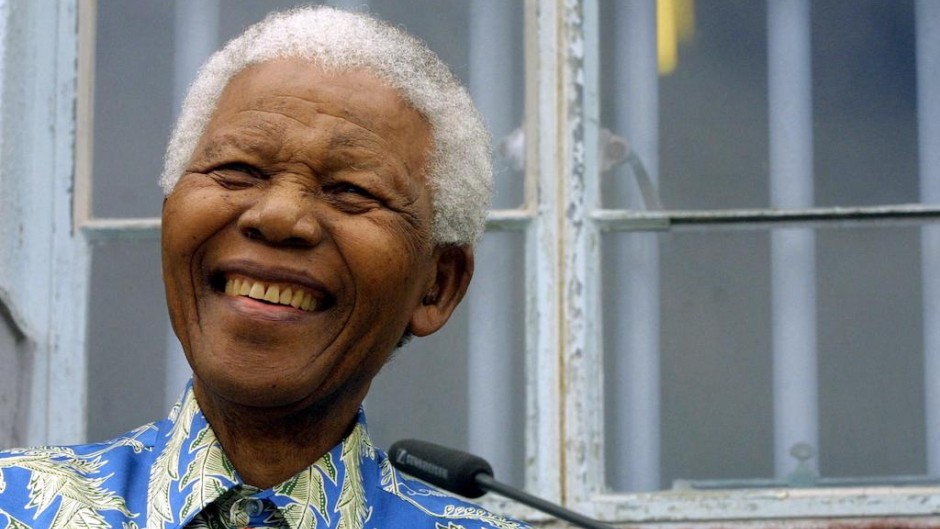
Former South African President Nelson Mandela. AFP/Anna Zieminski
JOHANNESBURG – The Constitutional Court has declined retired Deputy Chief Justice Dikgang Moseneke’s request to join as a friend of the court in a legal battle involving an auction of former President Nelson Mandela’s belongings.
Moseneke is the last surviving executor of Madiba’s estate, after Judge Temba Sangoni and advocate George Bizos SC died.
Mandela died in December 2013 and his estate is yet to be wound up.
Moseneke said he ought to be allowed to join the case as a friend of the court because he still has an interest in Madiba’s affairs.
Mandela’s eldest daughter, Dr Makaziwe Mandela, wants to put her father’s possessions on the block at Guernsey’s Auction House in New York.
However, the South African Heritage Resources Agency, Robben Island Museum and the Arts and Culture Department approached the court to stop the export and sale of the items.
The artifacts include Madiba’s green barcoded ID, which he used to vote in 1994, his hearing aid, 11 Madiba shirts, a suit, three briefcases, four walking sticks, one pair of shoes, hand-written letters, two pairs of sunglasses, a tea set, the tennis racket he used on Robben Island and gifts he received from different governments around the world.
In his founding affidavit, Moseneke said in terms of the National Heritage Resources Act 25 of 1999, the exporting of items linked to heritage is regulated.
“The 2019 Heritage Declaration includes ‘objects related to significant political processes, events, figures and leaders in South Africa’ ... Section 32(19) prohibits the export of a heritage object without a permit issued by SAHRA,” part of the papers read.
Moseneke said the belongings were to be auctioned off because of Madiba’s historical significance. This relates to his Robben Island incarceration, his release from prison and his post democratic legacy.
“The first and fourth respondents (Makaziwe and Christo Brand, a former Robben Island prison warden) did not purport to put the Mandela Objects for lease or sale in the auction abroad as their personal property without associating them with the above historical image, role and contribution as well as the enduring legacy of President Mandela.”
Moseneke alleges that in his will, Madiba bequeathed the Houghton property to the Nelson Mandela Trust and that some of his belongings were removed without the knowledge of the Trust, the executors and his widow, Graca Machel.
“In terms of the will, all the movable assets of Mr Mandela, in particular the personal effects were bequeathed to Mrs Machel.”
In addition to these submissions, Moseneke told the court of his close relationship with Madiba, which they formed after Moseneke was jailed at Robben Island as a 15-year-old.
Moseneke said their friendship continued even after he was released and Madiba remained.
“The case before this court raises issues of considerable public in importance which transcends the present dispute. The issues have a direct impact on the preservation of South Africa’s cultural, social and political memory and history.
“It is not hyperbole to say that this court’s findings will influence the national estate that this generation bequeaths to future generations of South Africans and people of the world.”
Despite this, the Apex Court declined the application.
“The Constitutional Court has considered the application of admission as amicus curiae. It has concluded that the application should be dismissed as the applicant has failed to make out a case for admission as an amicus curiae.”
The matter returns to court on 8 September.