
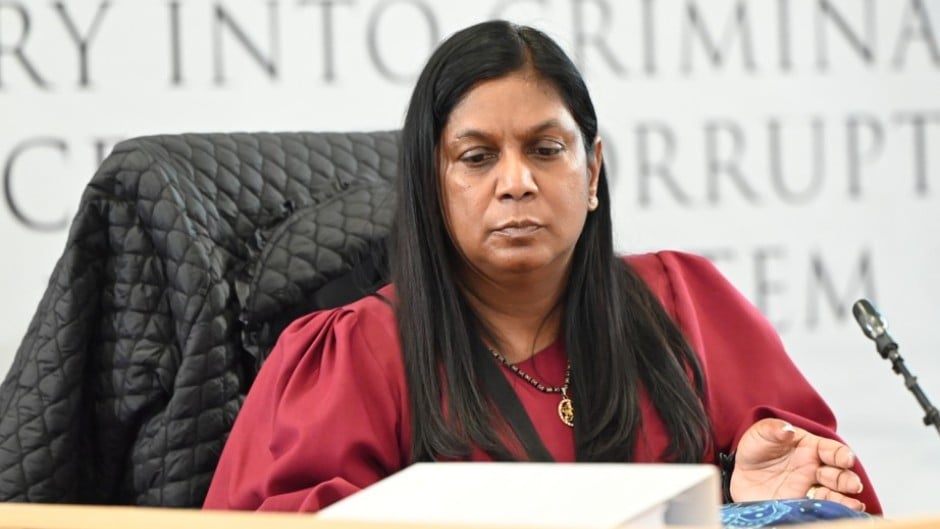
Andrea Johnson testifies at the Madlanga Commission of Inquiry. Gallo Images/Frennie Shivambu
JOHANNESBURG - Despite an impending leadership overhaul at the Investigating Directorate Against Corruption (IDAC), calls are growing for the anti-corruption unit to be disbanded altogether.
Critics argue that replacing its leadership will not resolve the structural weaknesses that have hampered its effectiveness since its establishment.
Good Governance Africa's executive director, Karam Singh, believes South Africa should instead create a fully independent anti-corruption agency with the powers and resources needed to tackle high-level corruption.
According to Singh, IDAC was conceived as a temporary solution based on the former Scorpions model of prosecution-led investigations.
However, he argues that the unit has been fundamentally constrained from the outset.
He points to the resignation of former IDAC head Hermione Cronje as evidence of these shortcomings.
Cronje cited operational inefficiencies, a lack of independence, the absence of a dedicated budget, and administrative obstacles that made it difficult to recruit the specialised expertise needed to investigate complex corruption cases.
Singh says these challenges highlight why housing anti-corruption bodies within existing institutions such as the National Prosecuting Authority (NPA) or the South African Police Service (SAPS) leaves them vulnerable to political and operational pressures.
"The fight against corruption is inherently challenging. It's inherently political," Singh said.
"When we have investigative bodies housed within other institutions, such as the SAPS and the NPA, we're setting ourselves up for the types of challenges that we see."