
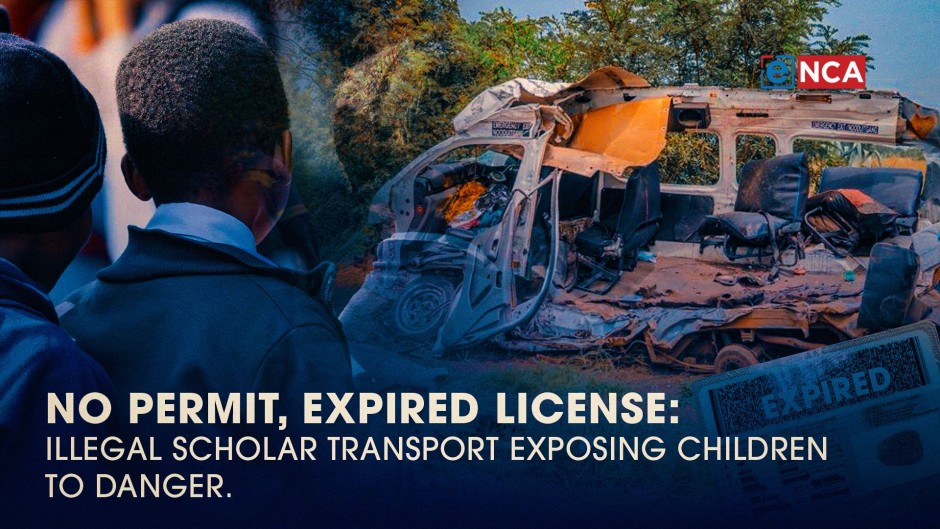
JOHANNESBURG - More than 700,000 children in South Africa’s basic education sector rely on scholar transport to get to and from school every day.
While authorities regularly conduct roadworthiness checks and verify permits for registered scholar transport operators, the reality is that many private arrangements fall outside the department’s oversight.
READ | Families grieve as driver faces charges in Vaal scholar transport crash
These unregistered scholar transport often operate under the radar, exposing pupils to serious safety risks.
This is the grim picture Basic Education Minister Siviwe Gwarube painted as she called out private scholar transport operators who continue to operate outside the regulations of legitimate scholar transport services.
These concerns came into focus following the deadly crash on Monday, which claimed the lives of 12 pupils and left several others injured.
The accident happened on Monday morning on a narrow road near Vanderbijlpark.
Gauteng authorities confirmed that the 22-year-old taxi driver did not have a valid Professional Driving Permit (PDP) at the time of the crash.
He has now been arrested following his discharge from hospital.
How private operators slip through the cracks
Gauteng Roads and Transport MEC Kedibone Diale-Tlabela says scholar transport in the province is divided into two categories — government-subsidised transport and private operators.
She explained that subsidised scholar transport falls under strict departmental oversight and regulations, while private operators often function outside direct government control.
The minibus involved in the deadly Vanderbijlpark crash was privately owned by an individual operating a scholar transport service, Diale-Tlabela said.
She noted that while two associations operate in the area, they are not subsidised by the Gauteng government.
As a result, the sector is not well-regulated.
“We've been working closely with those operators to ensure that we first organize them and get them registered within the association secondly recognise them as the department of roads and transport.”
Tracking, removals and arrests
Since the start of the 2026 academic year, the Gauteng government says authorities have been on the streets carrying out intensive evaluation of all scholar transport in the province.
Between 12 and 18 January, over 700 notices valued at over R1 million were issued while discontinuing 93 unroadworthy and non-compliant vehicles from the road.
| Tshwane | 335 valued at R511 000 |
| Johannesburg | 442 valued at R696 000 |
The province further reveals that crime-related interventions led to five arrests in Johannesburg, including suspects detained for drunk driving, bribery and illegal immigration.
| 57 minibuses operating without valid licence discs |
| 153 minibus drivers operating without valid driving licences |
| 74 minibuses discontinued for non-compliance |
A way forward
Scholar transport features prominently in the ongoing review of the Integrated Transport Master Plan 2025.
The plan aims to work closely with operators to ensure they are registered with recognised associations and formally integrated into the department’s system.
The province is also moving towards an e-policy system that will allow authorities to better identify and track unroadworthy vehicles.