
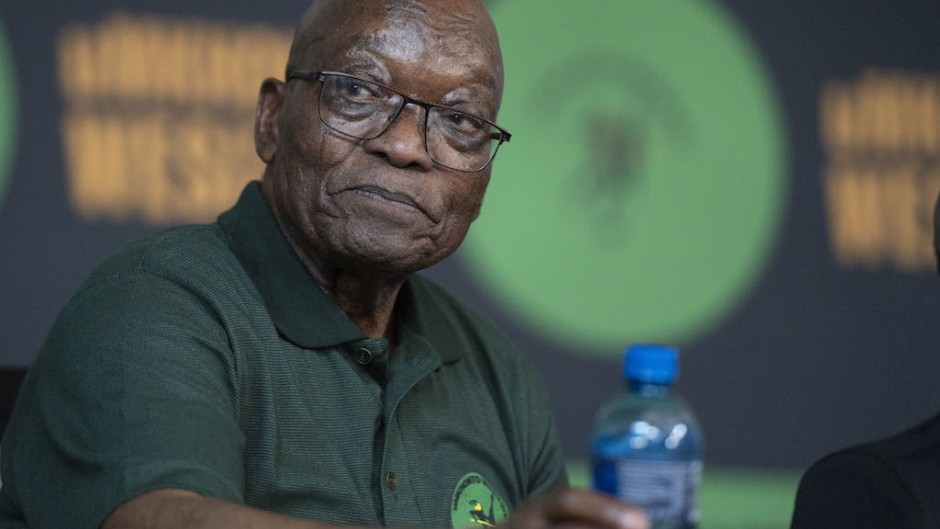
JOHANNESBURG – Former president Jacob Zuma's meeting with alleged state capture architect Ajay Gupta during a recent trip to India has sparked fresh criticism. Analysts and anti-corruption campaigners have slammed the visit as a display of impunity and double standards.
The trip, reported to have taken place in late June this year is now the subject of an investigation by the Department of International Relations and Cooperation (Dirco).
Zuma's believed to have included a stop in Saharanpur, Ajay’s hometown, before concluding his visit to the sub-continent with a sacred ceremony at a temple in Haridwar.
There, Zuma met among others with a spiritual leader who offered him prayers ahead of this year's local government elections. South Africa's High Commissioner to India, Anil Sooklal, was seen accompanying the former President.
In a video shared by India Today on YouTube on 26 June, the former statesman is seen observing a religious ceremony with 'his friend' Ajay.
It's these images of Zuma and Ajay together that have led to several questions directed at Ronald Lamola, Dirco Minister. On Wednesday, he finally responded. Lamola said while Zuma was entitled to certain privileges as a former head of state, this did not give him a right to run a parallel foreign policy.
Lamola also confirmed an investigation into Sooklal's presence during the visit to the Guptas.
Dr Imraan Buccus, a senior research associate at Auwal Socio-Economic Research Institute, said it was concerning that a high commissioner representing South Africa could be seen facilitating Zuma's trip to the Guptas in India.”
“One would think he [Sooklal] would take steps to ensure that the fugitive is brought back to face justice before the South African authorities."
The political implications of Zuma's visit are yet to be fully understood.
The former President's appearance alongside Gupta - who remains one of South Africa's most prominent fugitives - has led to more questions than answers.
These include, among others - Why was South Africa's top diplomat in India present? Was the visit purely private? And what does the public embrace of Gupta say about Zuma's relationship with a family whose alleged influence over his administration became synonymous with state capture?
According to Dr Buccus, Zuma's trip to Ajay could spell trouble for the city of eThekwini in the wake of the 4 November Local Government Elections.
"With Zuma being the founder of MKP and a key figure in the party, my own knowledge of internal assessments is that the MKP will take at least 40% of the votes in eThekwini. My assessment is that the Guptas would see this as strategic. That might be a possible city for the Guptas to loot, much like they looted South Africa at the national level.”
Meanwhile, political analyst Doctor Ntsikelelo Breakfast said the reunion is entirely consistent with Zuma's long-standing position.
“This is a person who was vehemently opposed to the Zondo Commission, which was instituted by him. He never saw anything wrong with his relationship with the Gupta family.”
Breakfast said it could not be ruled out that Zuma's trip was intended to solicit funding for the MK Party ahead of the local government elections.
“It is an open secret that these people were financing him. We can't rule out the possibility that they never stopped financing him even after they left the country.”
Breakfast also pointed to what he described as contradictions within the MK Party itself.
Less than a year after expelling Floyd Shivambu for meeting another fugitive, Shepherd Bushiri, Zuma himself has now been photographed publicly alongside Gupta - without any suggestion that similar disciplinary standards apply to the party's founder.
“Politicians like to apply double standards. Sometimes statements are made just to play politics.
eNCA's efforts to solicit comment from the MK Party have thus far proved unsuccessful. The party's comment will be added once received.
During his visit, Zuma described Gupta as a "brother" and a "friend", making no reference to the findings of the Zondo Commission.
The four-year-long Inquiry found, among other things, that "Ajay helped transform the Gupta family's business empire into an organised network that systematically siphoned public funds from state-owned entities, including Eskom and Transnet."
Justice Raymond Zondo added that through its relationship with Zuma, the Gupta family allegedly influenced government appointments, offered Cabinet positions in exchange for commercial favours and manipulated state advertising budgets for private benefit.
Zuma and the Gupta family have consistently denied allegations of state capture but have not sought to review or set aside the commission's findings.
Corruption Watch’s Janine Erasmus said Zuma's trip reflected the lack of accountability for those implicated in state capture.
“It's a slap in the face for the people of South Africa to see Zuma travelling overseas and visiting old comrades, whether they are dubious or not,” Erasmus said.
“So many people were disadvantaged because of corruption. One could say Zuma is at least loyal, but unfortunately not loyal to South Africa.”