
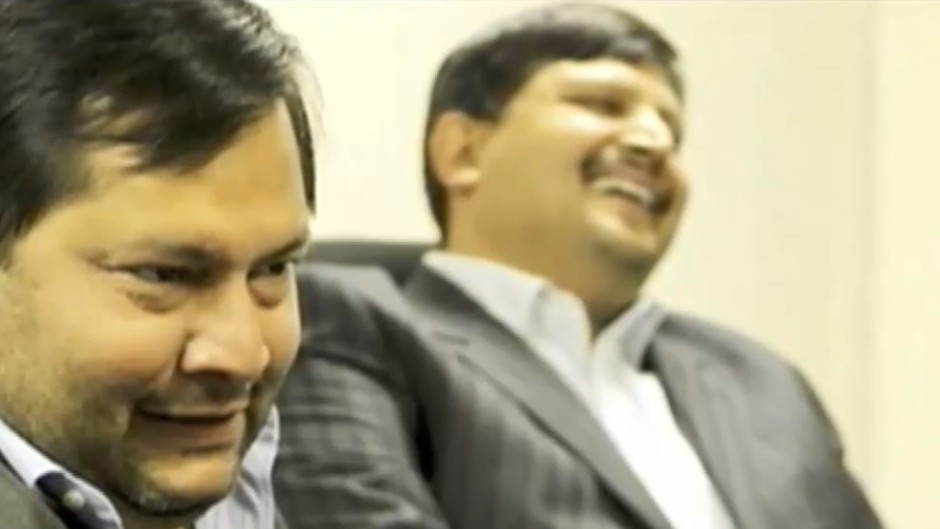
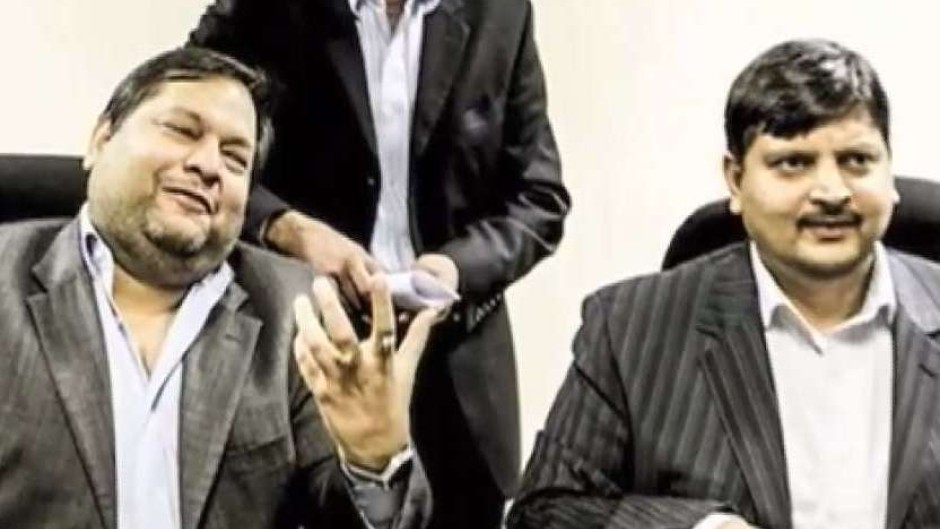
JOHANNESBURG - The 2013 landing of a privately chartered jet at Waterkloof Air Force Base was more than a diplomatic scandal. It was the moment that exposed how deeply the Gupta family had penetrated South Africa's political and business landscape.
What began as an unprecedented breach of protocol soon unravelled into one of the country's biggest corruption investigations, drawing in senior government officials, cabinet ministers and, ultimately, former president Jacob Zuma as the full extent of state capture came to light.
But how did a family from India's Saharanpur city move to South Africa and become so closely linked to government and the alleged state capture project that unfolded over several years?
It all began in 1993, when Atul Gupta arrived in South Africa. Over the following years, the family built a sprawling business empire and several members became South African citizens.
Eventually, the Guptas found themselves at the centre of the country's most significant corruption scandal.
According to a report by The Hindu, brothers Ajay, Atul and Rajesh Gupta grew up watching, and later working alongside, their father, Shiv Kumar Gupta, who ran ration shops and distributed soapstone powder used in talcum powder.
Gupta Senior also imported spices from Madagascar and Zanzibar, which may have given the family its first exposure to Africa and its business opportunities.
Building a business empire
According to the report, it was on his father's advice that Atul moved to South Africa. Together with his brother Ajay, he founded Correct Marketing in 1994, which later became Sahara Computers.
As the business expanded, other members of the Gupta family joined them in South Africa.
The family went on to expand into the media sector, launching The New Age newspaper in 2010 and television news channel ANN7 in 2013.
Zuma and the Guptas
Reports indicate that the Guptas carefully cultivated a relationship with Zuma as their business interests grew, beginning with their first meeting with the then deputy president in 2003.
Several members of Zuma's family worked for Gupta-linked companies at different times.
His son, Duduzane Zuma, served as a director of several Gupta-owned companies, while his daughter, Duduzile Zuma, was appointed a director of Sahara Computers in 2008. Both later resigned from their positions.
Zuma's wife, Bongi Ngema-Zuma, also worked as a communications and marketing officer for JIC Mining Services, a company controlled by Gupta-owned Oakbay Investments. JIC Mining Services, which Oakbay acquired in 2006, was liquidated in 2018.
State capture takes hold
In its final report, the Zondo Commission found that the Gupta enterprise benefited from at least R15.5 billion through state capture, making it one of the largest corruption schemes uncovered in democratic South Africa.
The Commission identified state-owned entities Transnet and Eskom as the biggest sources of illicit gains and found that the Gupta enterprise began capturing state-owned entities as early as 2011.
The report said:
"This led to the awarding of a vast array of contracts and payments of billions of rand to entities paying kickbacks to, or controlled by, the Gupta enterprise."
The Commission also found that Zuma "readily opened doors for the Guptas to go into SOEs and help themselves to the money and assets of the people of South Africa".
According to the Commission, Zuma appointed allies to strategic positions in government, while governance rules and structures were altered to centralise power and bypass checks and balances designed to ensure fair procurement processes.
The Commission found evidence that the Guptas used their direct access to Zuma to influence the appointment of loyalists, including Malusi Gigaba and Brian Molefe, to key ministerial posts and state-owned entity boards.
Once Gupta-aligned officials were in place, the Commission found, certain companies were awarded lucrative state tenders before paying kickbacks to Gupta-controlled entities in return for securing the contracts.
The Commission also heard evidence that money generated through these schemes was laundered through multiple jurisdictions to conceal both its origins and its ultimate beneficiaries.
Numerous whistleblowers, including former deputy finance minister Mcebisi Jonas and former ANC MP Vytjie Mentor, testified that Duduzane Zuma drove them to the Gupta family's Saxonwold compound, where they were allegedly offered Cabinet positions in exchange for advancing Gupta business interests.
In its final findings, the Zondo Commission concluded that Zuma used his position as president to shield the Guptas from investigation by repeatedly appointing compliant officials to the National Prosecuting Authority and the Hawks.