
WASHINGTON - The United States and Iran agreed to a two-week ceasefire barely an hour before President Donald Trump's deadline to obliterate the rival country was set to expire, with Tehran to reopen the vital Strait of Hormuz temporarily.
After more than a month of blistering attacks by the United States and Israel, Iran cast the ceasefire as a victory and said it had agreed to talks with Washington to begin Friday in Pakistan on a path to end the conflict.
Trump said he had spoken to Pakistan's leaders who "requested that I hold off the destructive force being sent tonight to Iran."
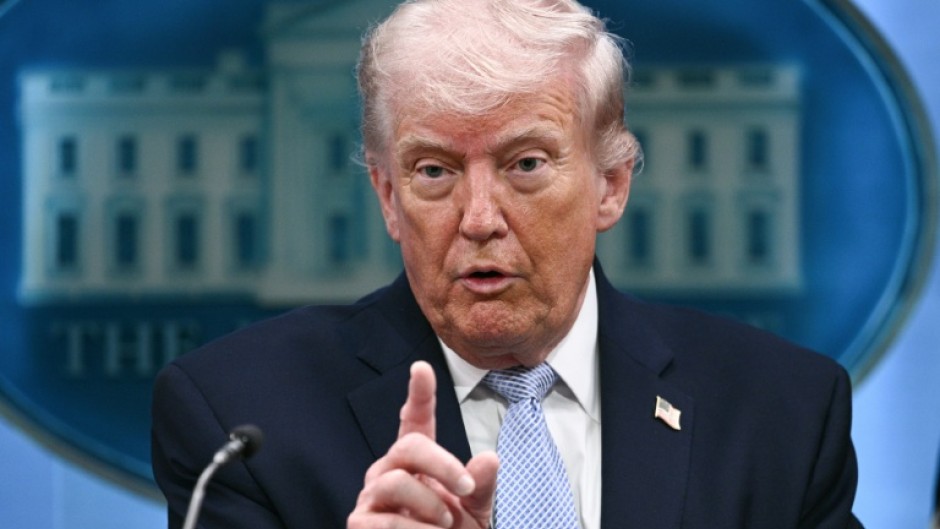
"Subject to the Islamic Republic of Iran agreeing to the COMPLETE, IMMEDIATE, and SAFE OPENING of the Strait of Hormuz, I agree to suspend the bombing and attack of Iran for a period of two weeks," Trump wrote on his Truth Social platform.
Iranian Foreign Minister Abbas Araghchi confirmed safe passage for ships through the Strait of Hormuz for two weeks, the gateway to one-fifth of the world's oil, which Tehran sealed off in retaliation for the war launched on February 28.
"If attacks against Iran are halted, our Powerful Armed Forces will cease their defensive operations," Araghchi said.
Prime Minister Shehbaz Sharif of Pakistan, who has played a key mediator role, said that the ceasefire would start immediately.
He said that the United States "along with their allies" had agreed to a ceasefire everywhere, including Lebanon, implying that Israel had agreed to halt its invasion of its northern neighbour.
Israel did not immediately react. Its assault on Lebanon in response to rocket fire by Iranian-backed Hezbollah has led to more than 1,500 deaths, according to Lebanese authorities.
Israel had encouraged Trump to join the war against Iran, its arch-nemesis, and in the first strikes killed the long-serving supreme leader, Ayatollah Ali Khamenei.
Trump said that the United States was "very far along" in negotiating a long-term agreement with Iran, which had submitted a 10-point plan that he said was "workable."
But Iran publicly released points that took maximalist positions, including lifting longstanding US sanctions, guaranteeing its own "dominion" over the Strait of Hormuz and removing US forces from the region.