
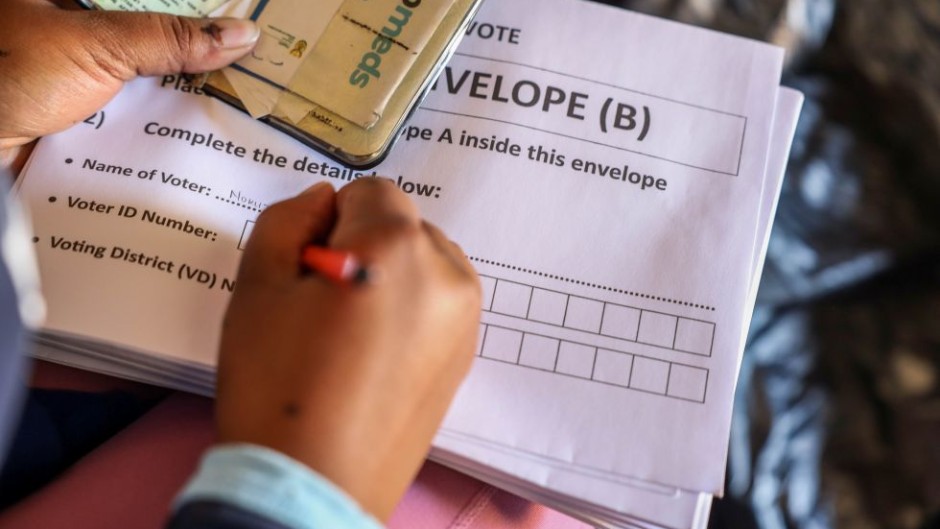
JOHANNESBURG - The Local Government Elections are just weeks away, with voters heading to the polls on 4 November 2026.
Special voting will take place on 2 and 3 November, allowing eligible voters whose applications have been approved to cast their ballots ahead of Election Day.
Here is what you need to know if you applied for a special vote.
How does a home visit work?
Voters whose home visit applications have been approved can cast their ballots at home on 2 or 3 November.
This option is intended for voters who cannot travel to their voting stations because of physical infirmity or disability.
How does voting station-based special voting work?
Voters whose applications for voting station-based special votes have been approved must visit their designated voting stations on 2 or 3 November to cast their ballots.
This allows eligible voters who are unable to vote on Election Day to participate in the elections ahead of time.
Can someone assist me to vote?
Voters with physical disabilities, including blindness or visual impairment, may be assisted by a person of their choice.
The person assisting must be at least 18 years old and cannot be a candidate or party agent.
Voters who require assistance should confirm the applicable procedures with the Electoral Commission of South Africa (IEC).
How many special vote applications have been approved?
The IEC has approved a record 2,655,067 special vote applications for the 2026 Local Government Elections.
This represents a reported 131% increase compared with the 1,147,759 special votes approved for a comparable election in 2021.
KwaZulu-Natal recorded the highest number of approved home visit applications, at 143,714, while Gauteng had the highest number of voting station-based applications, with 391,589.
Which provinces recorded the most special votes?
According to the figures provided by the IEC, Gauteng recorded the highest number of approved special votes, followed by the Eastern Cape.
Who applied for special votes?
The IEC’s figures show that women account for a larger share of applications in both categories.
Women represent 74% of approved home visit applications and 64% of voting station-based applications.
Voters aged 60 and older account for 79.6% of home visit applications, with those aged between 70 and 79 making up the largest age group.
The figures indicate that home visits are predominantly used by older voters, while voting station-based special votes serve a relatively younger group.
Special voting takes place on 2 and 3 November, ahead of Election Day on 4 November 2026.