

JOHANNESBURG - From checking voters against the voters’ roll to issuing ballot papers and managing queues, election officials have different responsibilities to help ensure voting runs smoothly.
As South Africa prepares for the 4 November 2026 Local Government Elections, the Electoral Commission of South Africa (IEC) is responsible for putting the people and procedures in place to manage voting.
But who are the officials working at a voting station, and what does each person do?
The IEC’s election team includes presiding officers, deputy presiding officers, voters’ roll officers, ballot paper issuers, ballot box controllers, queue walkers, door controllers and inkers.
Here is a guide to the people voters may encounter at a voting station.
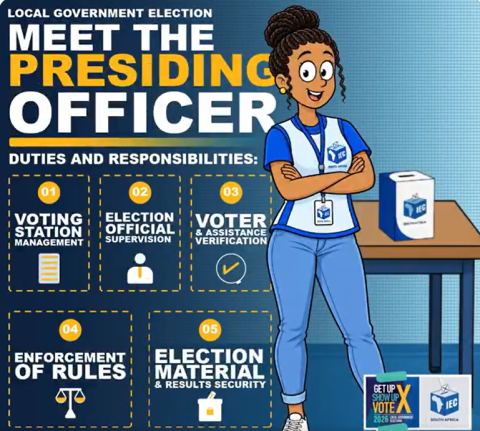
What does a presiding officer do?
The presiding officer is responsible for managing the voting station and overseeing the election officials working there.
The role includes supervising staff, assisting with voter verification, enforcing voting procedures and helping ensure election materials and results are handled securely.
The deputy presiding officer assists the presiding officer, supervises election officials and helps manage the voting process. The deputy may also help maintain order and deal with challenges that arise during voting.
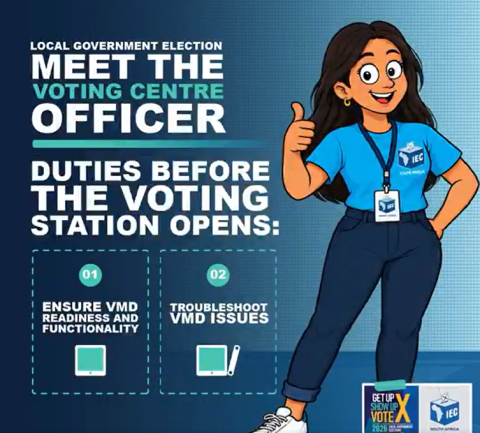
Who checks whether you are registered to vote?
The voters’ roll officer or voter management device (VMD) operator helps verify voters’ details against the voters’ roll.
Voters must be checked against the relevant records before proceeding through the voting process. The VMD is used to support voter verification and the administration of the voters’ roll.
If there is a problem with a voter’s details or the device, the matter can be referred to the relevant election official for assistance.
Who gives you your ballot papers?
The ballot paper issuer is responsible for issuing ballot papers to eligible voters at the appropriate stage of the voting process.
Voters should follow the instructions provided by election officials and make sure they understand how to mark their ballot papers correctly.
Who controls the ballot box?
The ballot box controller helps oversee the ballot box and supports procedures intended to protect the integrity of the voting process.
Election officials are responsible for following the prescribed procedures for handling election materials and ensuring ballot boxes are managed appropriately.
What does an inker do?
The inker is responsible for applying the prescribed electoral ink as part of the voting process.
The procedure helps election officials administer voting in accordance with the applicable rules and safeguards.
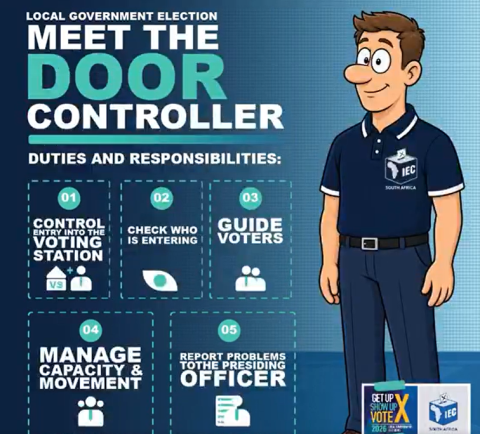
Who manages the queues?
The queue walker helps manage the flow of voters, provides directions and assists with movement around the voting station.
The door controller manages entry into the voting station, checks who is entering, guides voters and reports problems to the presiding officer.
These roles help keep the voting process organised, particularly when a voting station is busy.
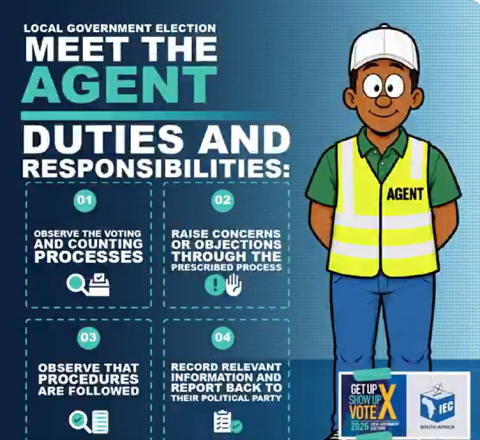
Can party agents also be present?
Political party agents and accredited election observers may be present in accordance with the applicable rules.
Their roles differ from those of IEC officials. Party agents represent their respective parties and may observe the process and raise concerns through the prescribed procedures. Election observers monitor proceedings in accordance with their accreditation and applicable rules.
They do not replace the officials responsible for administering the vote.
Why are these roles important?
Every official has a specific responsibility, from verifying voters and issuing ballot papers to maintaining order and managing election materials.
Together, these roles help the IEC administer voting in an orderly manner and follow the procedures intended to protect the integrity of the elections.
For official election information, consult the IEC’s website.