
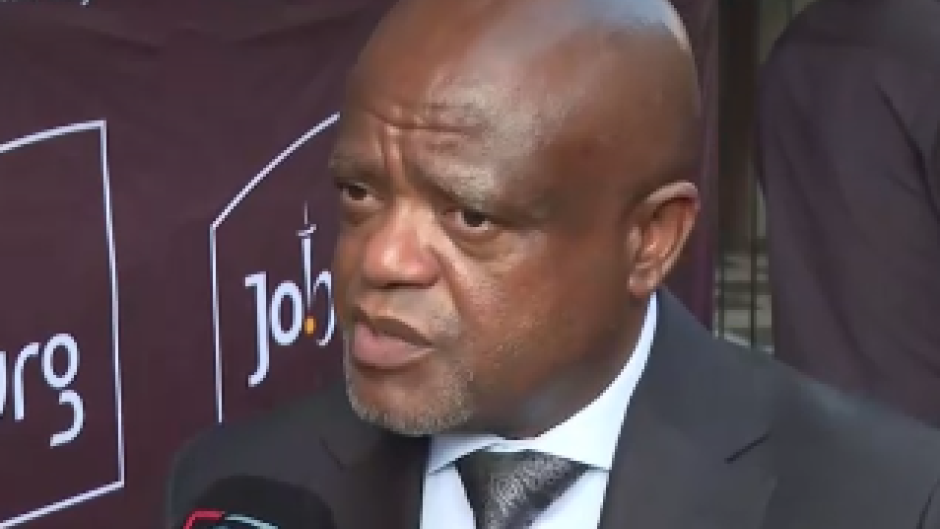
JOHANNESBURG - Just a day after Eskom threatened to cut off power to Johannesburg over R5 billion, the City Mayor Dada Morero took the podium for his State of the City Address under a lingering dark cloud of electricity crisis.
Dressed in his suit and tie, Morero, who said the elephant in the room could not be ignored, finds himself rushing to keep the lights on.
He revealed that there have been requests for proposals issued to approved development finance institutions.
This, he said, has resulted in agreement in principle with KFW, a German bank, to provide a loan of 200 million euros to fund energy-related projects.
READ | Eskom threatens to pull plug on Joburg over unpaid debt
According to Morero, this is well aligned with City Power’s project pipeline and infrastructure funding requirements.
“The City as the borrower and City Power as an Execution Agent are currently finalising a contract with KFW with the expectation that KFW will be disbursing the agreed loan amount before the end of June 2026.”
The utility has given the city until 8 July to settle arrears.
According to Eskom the City of Johannesburg and City Power currently owe an arrear debt of over R5 billion, excluding the current account of a further R1 billion due on 5 June 2026.
Eskom said it has been working with the city for over two years to support the metro in meeting its payment obligations.
The utility said the city alongside City Power failed to honour its agreement resulting in Eskom having to issue a notice to pull the plug on supply of electricity to certain bulk supply points.
Morero said City Power does have a turnaround plan that addresses this challenge.
Part of that solution is to implement the National Treasury and the Departments of Cooperative Governance and Traditional Affairs guidance to reform and strengthen Municipal Trading Entities.
“This reform agenda will assist the City to improve governance, financial sustainability, operational efficiency and accountability within entities that have historically operated under significant fiscal and infrastructure pressure,”