
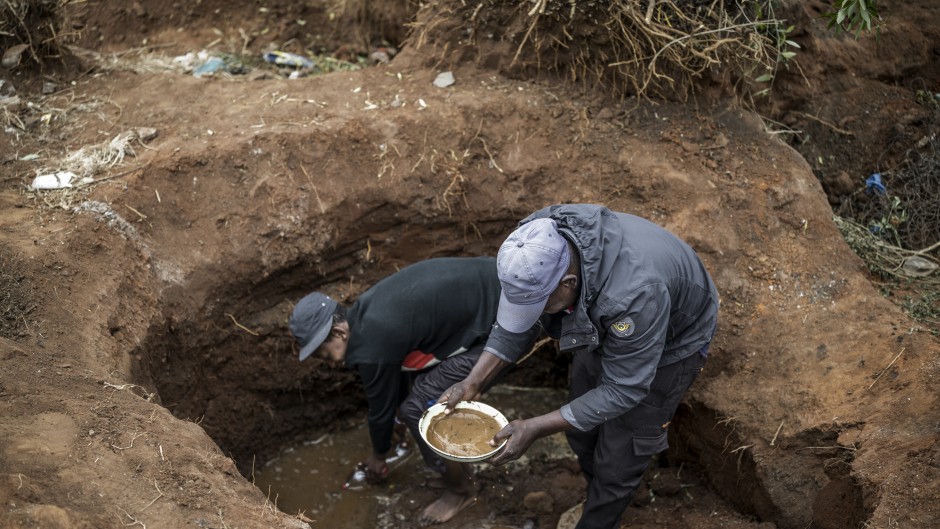
JOHANNESBURG - Mining expert David van Wyk has warned that the extraction of gold illegally is a complex and hazardous exercise.
He said soil is typically washed over a carpet containing mercury, which binds to gold particles.
The mercury is then scraped off and burned with a blowtorch to separate the gold.
Van Wyk says there is usually no gold found on agricultural land, despite the area's proximity to old mine dumps and abandoned mines.
READ: Excitement or illusion? Expert questions Springs gold rush
Also, he raises safety concerns, warning that the bucket-and-spade digging taking place in the area could pose risks, particularly to children who may get injured.
He says gold is not usually found on agricultural land, despite the area’s proximity to old mine dumps and abandoned mines.
However, the illegal processing of gold puts people at risk of mercury exposure.
According to the National Department of Health's guidelines for investigating and environmental control of human chemical exposure and poisoning cases, the treatment of mercury poisoning is, in many cases, difficult to treat if the source is unknown.
According to the guidelines, places known to have the highest mercury exposure are informal mining areas. Once a person or people are found to be exposed to high levels of mercury, they need to be isolated.
Industrial and government assistance may be required to help in preventing further human and environmental exposure.
READ: IN PICS |Armed with spades and buckets, residents hunt for gold in springs
Symptoms of mercury poisoning include:
- Tremors
- Insomnia
- Memory loss
- Neuromuscular effects
- Headaches and cognitive and motor dysfunction.
In children, symptoms include
- Muscle weakness
- Poor coordination
- Numbness in the hands and feet
- Skin rashes
- Anxiety
- Memory problems
- Trouble speaking, hearing or seeing.
The health department's guidelines say places where exposure is possible must be evacuated immediately.