
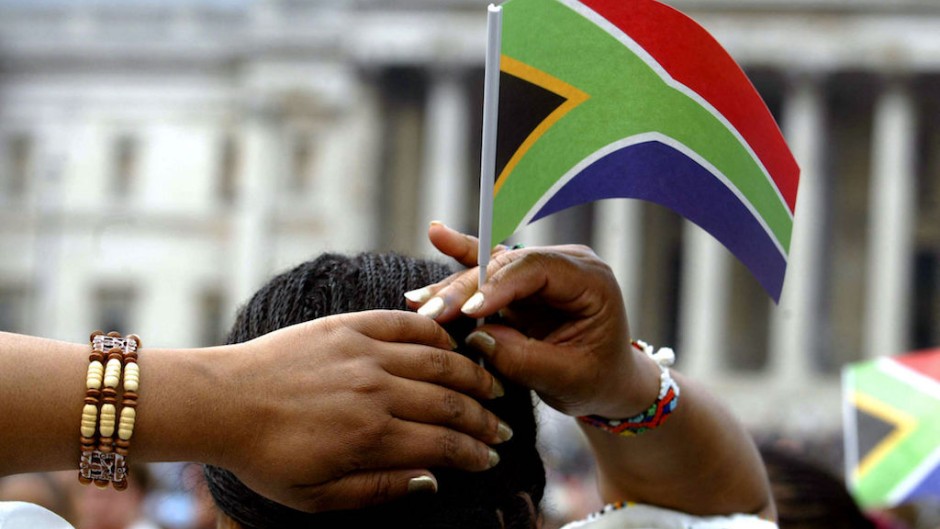
CAPE TOWN - Today, South Africa celebrates 32 years of democracy.
But is there truly freedom given the high levels of crime, gender-based Violence, poverty, and corruption?
eNCA spoke to some women in Cape Town who were part of the anti-apartheid struggle and put their lives on the line in the fight for freedom.
93-year-old Mildred Ramakaba-Lesiea has lost count of the amount of times she was detained during apartheid.
But she has no regrets about the part she played with other women to help bring the regime to its knees.
“Our spirit was one. We were united, and when that day came. Mandela would be released, and everybody was excited.
“We would say we will meet on Freedom Day when we were having our secret underground meetings. Some were held in my house, others were held at the beach.
Ramakaba-Lesiea said people chasing positions and who want to serve their own needs have infiltrated the ANC.
"That was the love and unity, and we did preach it, and we expected it after our liberation that that would happen. But it did not. Things did not go as we thought it would.
“We were infiltrated. I always ask where is our intelligence? During the time when we were fighting, we did not have educated intelligence. But we knew when some came into our branch. The language of this person, we would say, ‘no, no that is the wrong person’."
Agreeing with Ramakaba-Lesiea, Pat Fahrenfort, a political and social activist, said she doesn’t feel free.
“The signboards were all removed. We could go to any beaches and go to any restaurants, but could we afford to go to those restaurants? So, for me, that is kind of where Freedom ends. What happens after that? We have to look over our shoulders. We are not free. I do not drive at night, even in the daytime, you can be hijacked. I already was a victim, I was hijacked at gunpoint."
“The other thing is 30 years down the line, the appalling conditions under which learners and teachers must work. Pit latrine toilets. For how long do we blame it on apartheid? I really don't feel free."
Fahrenfort is imploring President Cyril Ramaphosa to listen to ordinary South Africans.
“When you were voted into this position, a lot of us felt very hopeful. You've got to listen to what people are saying. You cannot ignore people's cries."
Getrude Fester said freedom should be multi-layered.
“So now can you see why I say when Freedom Day comes, I want what freedom. A class freedom. Yes, I was able to get international scholarships, probably because of my education, my political activism, and feminism, so it's a class change.
"So it's on the one hand mixed feelings, I can vote. But did you see the voter apathy? People have lost faith."
Fester also fondly recalls being in the structure of the African National Congress to help bring about change
Toni Strasburg, a retired filmmaker and writer, said the struggle was not in vain.
"Because we do have a democratic South Africa and many good things are still happening. But we have incredible poverty still and a lot of things wrong."