
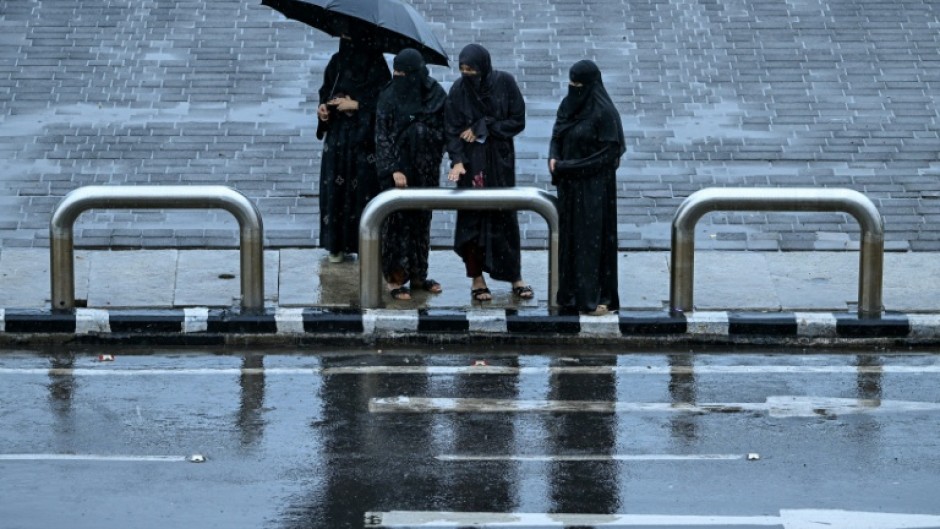
MUMBAI - Long-awaited monsoon rains arrived in India's financial capital, Mumbai, on Tuesday, cooling weeks of blazing heat despite persistent fears of water shortages, with total rainfall so far staying below the long-term average.
Hundreds of millions of people in India rely on the annual monsoon winds to bring vital rains that sustain agriculture and industry.
However, climate change is making the country hotter and shifting weather patterns, and the presence of the El Niño weather phenomenon this year has brought warnings of lower rainfall.
India had received 60.6 millimetres (2.4 inches) of rainfall by Monday, 43 percent less than the normal amount for this point in the season, according to weather department figures.
There was some relief for Mumbai on Tuesday when the first downpours finally swept in, delighting many of the city's 22 million inhabitants even as some suburbs had to make do with light drizzle.
"The Southwest Monsoon has further advanced into the remaining parts of central Arabian Sea, (and) some more parts of Maharashtra including Mumbai," the weather department said.
Warnings of a potentially insufficient monsoon have raised alarm among farmers and policymakers.
Authorities in Mumbai imposed restrictions on water use last week, cutting supplies to swimming pools and construction sites.
Some residents slept on beaches to gain respite from the sweltering night-time conditions, in a dense city where many live without air conditioning.
The monsoon is a colossal sea breeze that brings South Asia 70 to 80 percent of its annual rainfall between June and September.
It sweeps north over several weeks, providing rain for farmers to plant their crops -- a crucial lifeline for a sector that supports 45 percent of people in the world's most populous country.
Agriculture Minister Shivraj Chouhan said a contingency plan had been rolled out for 315 vulnerable districts to help farmers endure potentially low rainfall linked to El Niño.
He said water conservation must be accorded the highest priority.
"Every drop of water is precious and planning is being carried out with that objective," he said in a statement.
That included the immediate repair and strengthening of reservoirs, ponds, streams and dams, Chouhan said.
El Niño is a naturally occurring climate phenomenon that brings worldwide changes in winds, air pressure and rainfall patterns. It typically causes drier conditions in India and Southeast Asia.
The last El Niño helped make 2023 and 2024 the two hottest years on record.
- AFP