
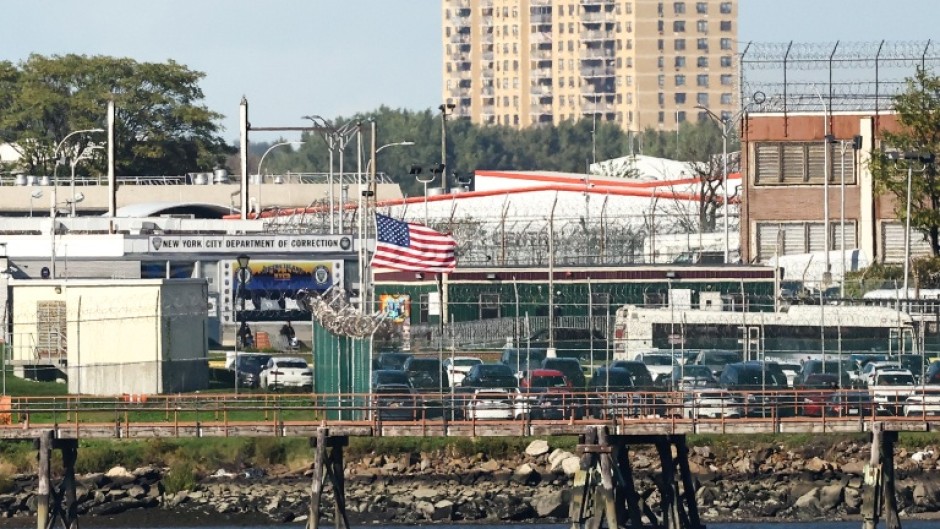
NEW YORK - New York Mayor Zohran Mamdani on Friday released a plan for closing the city's notorious Rikers Island jail complex by 2032 -- missing the original target date by five years.
Long criticized for unsanitary and violent conditions, the facility on the East River that opened in 1932 has counted Tupac Shakur, Mike Tyson, Sid Vicious and Harvey Weinstein among its inmates.
"We have a legal and moral obligation to close Rikers," Mamdani said in a statement, with longstanding complaints about the jail including staff shortages, widespread drug use and broken cell doors and windows.
"For decades, New Yorkers have demanded a correctional system that is safe and humane."
Rikers, which sits between the Bronx and Queens boroughs, primarily holds people who are awaiting trial in New York and have not been convicted of a crime.
Former mayor Bill de Blasio had pledged to close Rikers Island by August 2027, but with less than a year left until that deadline, the four smaller jails intended to replace it are still under construction.
The administration of Mamdani, who took office this year, and various NGOs have blamed the delay on the COVID pandemic and a lack of action by ex-mayor Eric Adams, a Democrat who served from 2022 to 2025.
"The call to close Rikers has echoed across our city for decades. Work has begun to do so, then stopped, and started once again. What will make this chapter different is our commitment to see it through," Mamdani told reporters.
Reducing the jail population
The new jails will be spread across New York -- one each in Manhattan, Brooklyn, Queens and the Bronx, to allow better accessibility to court dates, attorneys and families.
According to the plan released Friday, the first jail to open will be the Brooklyn facility, in 2029.
Authorities aimed to thin the jail population by reducing reduce pretrial detention and case delays.
Some of the 22 percent of the inmate population diagnosed with serious mental health conditions, along with others with complex health needs, will shift to hundreds of new beds in medical facilities.
The city will also invest $146 million next fiscal year to boost mental health care, substance use treatment, educational and vocational programming and victim services.
The measures are collectively expected to reduce the number of detainees from 6,600 to approximately 4,000.
The first calls to close Rikers date back to the 1960s, driven by dangers for both inmates and correction officers. Politicians and public opinion rallied to the cause in the 2010s partly due to fierce campaigning by families and former inmates.
The Vera Institute of Justice nonprofit, which wants to see Rikers closed, has attributed 48 deaths in New York City jails from 2022 to 2025.
Following its closure, the city government plans to use Rikers Island as a site for wastewater treatment and renewable energy.
- AFP